Pet Food Processing Equipment Market Forecast 2026 Growth: Is the Industry Entering a New Expansion Cycle?
April 25, 2026
The outlook for pet food processing equipment market forecast 2026 growth points toward sustained expansion, driven by premium pet nutrition trends, automation upgrades, and increasing global investment in intelligent food manufacturing systems. For equipment buyers, plant investors, and industrial processors, the market is not simply growing in volume, but evolving in technological complexity. From high-capacity extrusion lines to precision drying and coating systems, demand is shifting toward integrated solutions that improve efficiency, traceability, and product innovation.
The growth trajectory is supported by several structural forces. Humanization of pets continues to increase demand for functional pet food, grain-free formulations, fresh diets, and customized nutrition. At the same time, manufacturers are scaling production while facing pressure to reduce energy use, improve consistency, and comply with food safety standards. This combination is creating strong momentum for advanced processing systems. For decision-makers evaluating capital expenditure in 2026, understanding where growth is happening and which technologies are shaping investment priorities is becoming increasingly important.
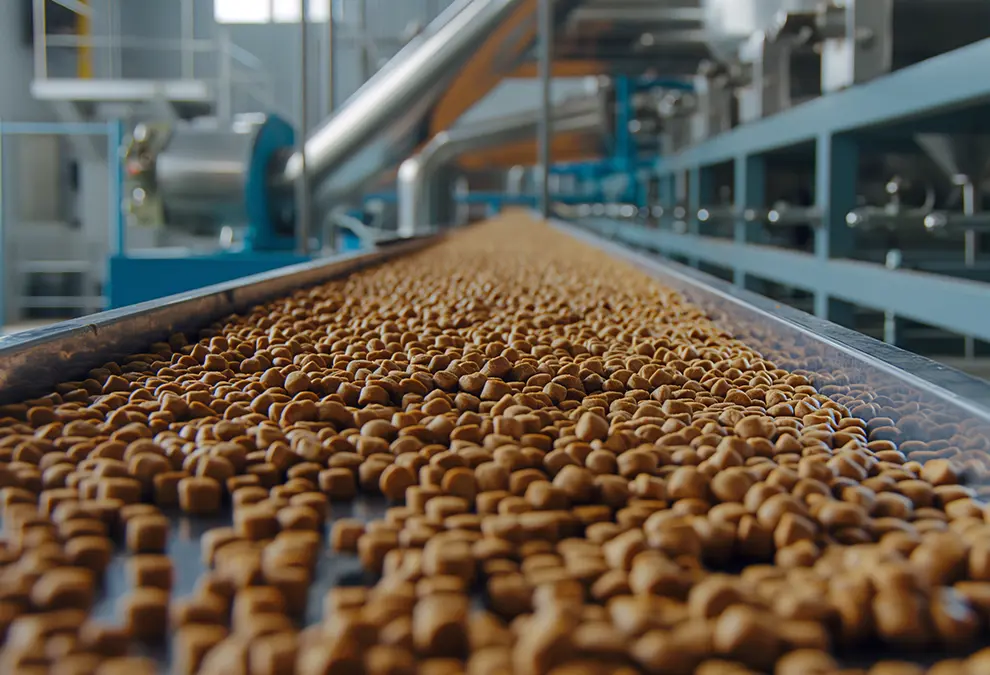
What Is Driving Pet Food Processing Equipment Market Growth in 2026?
The projected growth of the global pet food processing equipment sector is being shaped by both consumption-side and production-side factors.
Rising Demand for Premium and Functional Pet Nutrition
Premiumization has transformed equipment requirements. Traditional kibble lines are being upgraded to support freeze-dried inclusions, high-protein recipes, fresh pet food, and nutraceutical formulations. This trend increases demand for flexible extrusion, multi-stage drying, vacuum coating, and intelligent batching systems.
Manufacturers that once focused on commodity products are now investing in advanced pet food production line solutions capable of producing multiple recipes with rapid changeovers. This flexibility is increasingly seen as a competitive necessity.
Automation and Smart Factory Upgrades
Another major growth engine is industrial automation. Labor constraints, stricter quality standards, and energy optimization targets are pushing processors toward automated controls, PLC-based monitoring, and Industry 4.0-enabled production systems.
Modern lines now often include:
- Automated ingredient dosing
- Real-time moisture and temperature control
- Recipe management systems
- Predictive maintenance sensors
- Integrated packaging synchronization
These technologies raise equipment value per installation, contributing directly to market expansion.
How Equipment Segments Are Expected to Perform
Not all equipment categories are growing at the same pace. Some segments are seeing particularly strong momentum.
Extrusion Systems Continue Leading Capital Investment
Extrusion remains central to dry pet food production, and innovation in twin-screw technologies is accelerating. Demand for high-output, energy-efficient pet food extruder machine systems is expected to remain strong due to their versatility across kibble, treats, aquatic feed, and specialty formulas.
Advanced extruders are increasingly designed to support:
- Better starch gelatinization
- Improved digestibility
- Controlled density variation
- Expanded ingredient compatibility
- Higher throughput with reduced waste
Drying, Coating, and Auxiliary Systems Gain Share
While extrusion often receives the most attention, downstream equipment is capturing growing investment. Dryers, flavoring systems, vacuum coaters, and cooling conveyors are becoming critical for premium product development.
Equipment suppliers offering full integrated lines rather than standalone machines are therefore likely to benefit disproportionately from 2026 growth.
Table 1. Growth Outlook by Equipment Segment
| Equipment Segment | Growth Momentum 2026 | Primary Drivers |
|---|---|---|
| Extrusion Systems | High | Premium kibble, flexible formulations |
| Drying Systems | High | Energy optimization, quality control |
| Coating Systems | Medium-High | Functional additives, palatability |
| Grinding and Mixing | Medium | Raw material precision |
| Packaging Integration | High | Automation and traceability |
Caption: Comparative outlook of major pet food processing equipment categories in 2026.
For processors considering expansion, evaluating entire line efficiency rather than isolated machine costs is increasingly the more strategic approach.
Discuss customized equipment solutions with our engineering team for your next pet food project.
Regional Investment Trends Shaping the Market Forecast
Regional demand patterns are also influencing market growth.
North America Continues Technology-Led Investment
North America remains a major equipment market due to premium pet food innovation and modernization of established plants. Investment is increasingly directed toward smart retrofits, digital controls, and higher sanitation standards.
Large processors are focusing not only on capacity additions but also on upgrading operational intelligence.
Asia-Pacific Shows Strong Expansion Potential
Asia-Pacific is expected to remain one of the fastest-growing regions due to rising pet ownership and industrial feed manufacturing expansion.
Emerging processors in Southeast Asia and other developing markets often seek scalable systems that can begin with moderate capacity and expand over time. This favors modular equipment designs.
Europe Pushes Sustainability-Driven Equipment Demand
European investment trends are strongly linked to sustainability objectives, including:
- Lower energy consumption
- Reduced water usage
- Circular ingredient processing
- Carbon reduction targets
This creates opportunities for technology suppliers with advanced thermal efficiency solutions.
What Challenges Could Influence the 2026 Forecast?
Despite positive projections, several factors may affect growth patterns.
Raw Material Volatility and Capital Spending Cycles
Ingredient cost fluctuations can affect processor margins and delay equipment purchases. However, paradoxically, volatility often pushes manufacturers toward more efficient equipment investments over time.
Regulatory and Food Safety Complexity
As global standards evolve, processors require equipment capable of supporting compliance and traceability. Suppliers with strong engineering and validation support may have a distinct advantage.
Competition and Technology Differentiation
The market is becoming more competitive, particularly in extrusion and integrated systems. Buyers are increasingly evaluating suppliers beyond price, considering:
- Lifecycle operating costs
- Spare parts support
- Automation capabilities
- Technical service availability
- Custom engineering expertise
This trend favors experienced partners rather than commodity machinery vendors.
Strategic Opportunities for Equipment Buyers in 2026
For investors and factory managers, the biggest opportunity may lie not merely in responding to growth, but positioning ahead of it.
Investing in Scalable Line Design
Rather than purchasing equipment solely for immediate production needs, many processors are selecting scalable lines that support future product diversification.
A modular approach reduces long-term retrofit costs and supports market responsiveness.
Prioritizing Integrated Systems Over Standalone Machines
Fragmented production layouts often create bottlenecks. Integrated systems can improve:
- Throughput efficiency
- Product consistency
- Labor utilization
- Maintenance management
- Data visibility
Working with an experienced food processing machinery manufacturer can help align equipment architecture with long-term operational goals.
Evaluating ROI Beyond Purchase Price
Sophisticated buyers increasingly evaluate equipment using broader ROI metrics:
Table 2. Key Capital Investment Evaluation Factors
| Evaluation Factor | Strategic Importance |
|---|---|
| Energy Efficiency | High |
| Output Stability | High |
| Automation Level | High |
| Maintenance Cost | Medium-High |
| Product Flexibility | High |
| Initial Purchase Cost | Medium |
Caption: Factors increasingly used by processors when evaluating equipment investments.
This shift often changes supplier selection criteria significantly.
How Innovation May Reshape the Market Beyond 2026
The pet food equipment market forecast for 2026 may represent only an early phase of a larger transformation.
Several innovation areas are worth watching:
Alternative Protein Processing
As insect protein, cultivated ingredients, and novel proteins move into pet nutrition, processing requirements may shift substantially.
Equipment capable of handling these emerging materials may become a differentiator.
Digitalization and AI-Driven Production
Artificial intelligence for process optimization, predictive maintenance, and recipe control could become increasingly integrated into pet food manufacturing.
The factories adopting these systems early may gain measurable operational advantages.
Sustainability-Centered Equipment Engineering
Future purchasing decisions may place even greater weight on carbon efficiency and resource optimization, affecting equipment design standards globally.
For machinery suppliers, this means innovation is likely to become as important as manufacturing capacity.
FAQ
What is driving pet food processing equipment market forecast 2026 growth?
Growth is mainly driven by premium pet nutrition demand, automation investments, smart manufacturing adoption, and expansion of global pet food production capacity.
Which equipment segment is expected to grow fastest?
Extrusion systems and integrated downstream processing equipment such as drying and coating systems are expected to show particularly strong growth.
Is automation becoming necessary for pet food plants?
For medium and large processors, automation is increasingly becoming essential for efficiency, consistency, traceability, and labor optimization.
How should buyers evaluate equipment investments in 2026?
Beyond initial machine cost, buyers should assess lifecycle operating costs, flexibility, service support, energy use, and scalability.
Are integrated production lines better than standalone machines?
In many cases yes, because integrated systems often improve throughput, reduce bottlenecks, and support long-term ROI.
Why Meiteng Supports Forward-Looking Pet Food Manufacturers
As a specialized brand in food and feed processing technology, Meiteng supports manufacturers with advanced equipment solutions designed for efficiency, flexibility, and long-term production reliability. From extrusion and drying to complete line integration, Meiteng focuses on helping customers adapt to changing product demands and evolving market requirements. With engineering expertise, customization capabilities, and global project experience, Meiteng serves processors seeking practical, scalable solutions in a rapidly advancing industry.
References
- Wikipedia: Pet Food Industry
https://en.wikipedia.org/wiki/Pet_food - American Feed Industry Association (AFIA)
https://www.afia.org/ - U.S. Food and Drug Administration Animal Food Resources
https://www.fda.gov/animal-veterinary/animal-food-feeds - European Pet Food Industry Federation (FEDIAF)
https://europeanpetfood.org/