What Are the Key Components of a Pet Food Production Line and How Do They Impact Production Efficiency?
April 22, 2026
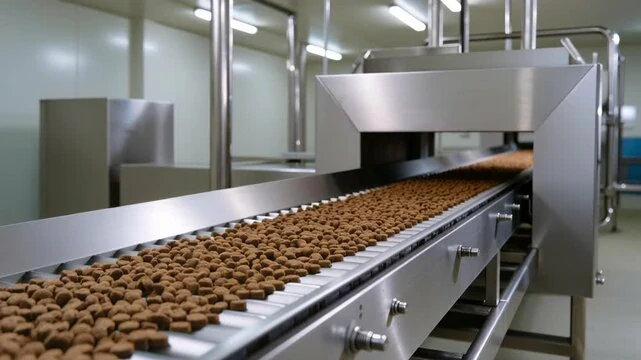
Understanding the Key Components of a Pet Food Production Line is essential for manufacturers seeking higher productivity, product consistency, and long-term return on investment. A modern pet food line is far more than a collection of standalone machines. It is an integrated system where raw material preparation, extrusion, drying, flavoring, cooling, and packaging must work in coordination. Each component affects throughput, nutritional integrity, operating costs, and final product quality.
For investors and plant managers, selecting the right line configuration is not only a technical decision but also a strategic one. For example, a poorly matched grinding system can reduce extrusion stability, while inadequate drying can impact shelf life and product safety. In contrast, well-designed production lines create efficiencies across the entire process. This article examines the critical components that define an effective pet food production line and how each contributes to commercial success.
Raw Material Handling and Pre-Processing Systems
The production process begins well before extrusion. Raw material handling and pre-processing systems establish the foundation for consistent product quality.
Ingredient Storage and Conveying Systems
Efficient raw material management starts with controlled storage and automated conveying. Ingredients such as meat meal, grains, vitamins, and functional additives require accurate handling to avoid contamination and ensure formulation consistency.
Modern systems often include:
- Bulk silos for major ingredients
- Screw and pneumatic conveyors
- Automated dosing stations
- Weighing and batching controls
- Dust collection systems
These components improve ingredient traceability while reducing labor intensity.
Grinding and Mixing Equipment
Particle size directly affects extrusion performance, digestibility, and kibble texture. Hammer mills or pulverizers are commonly used to achieve the desired fineness.
Mixers then ensure uniform distribution of proteins, starches, fats, and micronutrients before entering the extrusion stage.
Extrusion Systems: The Core of the Production Line
Among all Key Components of a Pet Food Production Line, the extrusion section is often considered the heart of the operation.
Twin-Screw Extruders for Process Flexibility
High-performance extrusion technology enables shaping, cooking, texturizing, and partial sterilization in one continuous process.
A well-engineered twin screw food extruder provides advantages such as:
- Improved process stability
- Better formulation adaptability
- Precise temperature and pressure control
- High-capacity production output
- Capability for specialty pet food products
Twin-screw systems are particularly valued for premium recipes, aquatic feed, and high-protein formulations where process control is critical.
Preconditioners and Feeding Systems
Upstream of the extruder, preconditioners hydrate and thermally treat ingredients to improve starch gelatinization and protein transformation.
Proper preconditioning supports:
- Energy efficiency
- Product expansion control
- Improved digestibility
- Reduced mechanical wear
Extrusion performance often depends as much on upstream conditioning as the extruder itself.
Drying, Flavoring, and Cooling Components
Once kibble or pellets are formed, downstream processing determines final product quality.
Drying Systems
Drying removes moisture to safe storage levels while maintaining structural integrity.
Common drying technologies include:
- Multi-layer belt dryers
- Continuous hot air circulation systems
- Hybrid energy-saving dryers
Critical control points include moisture uniformity, retention time, and thermal efficiency.
Oil Coating and Flavoring Systems
Modern pet foods often rely on post-extrusion coating systems to apply fats, palatants, probiotics, or functional ingredients.
Vacuum coating systems have become increasingly important for premium products because they allow deeper absorption and improved ingredient distribution.
Cooling Equipment
Cooling systems stabilize product temperature before packaging and help prevent condensation issues.
A poorly designed cooling stage can compromise otherwise well-processed products, making it a frequently underestimated component.
Table 1. Core Components and Their Primary Functions in a Pet Food Production Line
| Production Component | Primary Function | Impact on Final Product |
|---|---|---|
| Grinding System | Particle reduction | Texture and extrusion stability |
| Mixing System | Ingredient homogenization | Formula consistency |
| Extruder | Cooking and shaping | Product structure and digestibility |
| Dryer | Moisture reduction | Shelf life and safety |
| Coating System | Flavor and nutrient application | Palatability and nutrition |
| Cooling System | Temperature stabilization | Packaging performance |
For many processors, optimizing interactions between these components generates more value than upgrading any single machine alone.
Contact our engineers to discuss customized pet food line configurations for your plant.
Automation and Control Systems as a Strategic Component
In older production models, automation was often viewed as optional. That perspective has changed.
PLC and Smart Control Integration
Modern control systems regulate:
- Feed rates
- Extrusion temperature profiles
- Moisture levels
- Dryer parameters
- Recipe management
Integrated control reduces variability while supporting traceability requirements.
Data Monitoring and Predictive Maintenance
Advanced systems increasingly include data-driven diagnostics and predictive maintenance functions.
These capabilities can help processors reduce:
- Unexpected downtime
- Maintenance costs
- Product waste
- Energy inefficiencies
As labor costs rise, automation itself has become one of the most important Key Components of a Pet Food Production Line.
Packaging and End-of-Line Systems
Packaging is often treated as a downstream afterthought, yet it directly affects throughput and product integrity.
Packaging Equipment Integration
Automated weighing, filling, sealing, and coding systems are commonly synchronized with production output.
Well-designed packaging sections improve:
- Line efficiency
- Traceability compliance
- Product freshness
- Labor productivity
Secondary Packaging and Palletizing
For large-scale manufacturers, palletizing and case packing can significantly influence logistics efficiency.
Complete lines increasingly integrate these systems into broader production planning.
How Line Configuration Varies by Product Type
Not every pet food product uses identical configurations.
Dry Kibble Lines
Dry pet food systems generally emphasize:
- High-capacity extrusion
- Multi-stage drying
- Flavor coating systems
These are often the most common industrial configurations.
Treat and Specialty Product Lines
Functional treats or semi-moist products may require additional forming, baking, or coating modules.
Aquatic and Specialty Feed Systems
Many advanced pet food processing machines are designed to support floating or sinking feed production through highly specialized extrusion and drying control.
Table 2. Typical Line Differences by Product Category
| Product Type | Key Additional Requirements |
|---|---|
| Dry Kibble | Standard extrusion and drying |
| Semi-Moist Treats | Moisture control and baking |
| Functional Treats | Advanced coating systems |
| Aquatic Feed | Density and buoyancy control |
Caption: Typical production line variations based on pet food product category.
Understanding these distinctions is critical when specifying equipment investments.
Factors Buyers Should Evaluate When Selecting Production Components
Equipment decisions should be driven by more than initial machine pricing.
Key evaluation factors include:
Capacity Matching
Bottlenecks often arise when component capacities are mismatched.
Extruder output, dryer throughput, and packaging speed should be aligned as a system.
Scalability
Future product diversification may require modular expansion capability.
Energy Efficiency
Operating costs over equipment lifetime can far exceed purchase cost.
Service and Technical Support
Component performance depends heavily on commissioning, maintenance, and process support.
For many buyers, supplier engineering capability is nearly as important as machinery specifications.
FAQ
What are the key components of a pet food production line?
Core components typically include grinding systems, mixers, extruders, dryers, coating systems, coolers, automation controls, and packaging equipment.
Why is extrusion considered the heart of the line?
Extrusion performs cooking, shaping, and texturizing functions that largely determine product structure, digestibility, and quality.
Are twin-screw extruders better for premium pet food?
In many cases yes, because they offer superior flexibility, process control, and formulation adaptability.
How important is automation in modern pet food production?
Automation has become increasingly important for quality consistency, efficiency, traceability, and labor optimization.
Should buyers prioritize integrated lines over standalone equipment?
For many industrial operations, integrated lines improve throughput and reduce long-term operating inefficiencies.
Why Manufacturers Choose Meiteng
Meiteng specializes in advanced pet food production technologies designed for performance, flexibility, and industrial reliability. As a trusted equipment partner, Meiteng provides complete line solutions ranging from raw material preparation to extrusion, drying, and packaging integration. Our engineering team focuses on helping customers optimize productivity, reduce operating costs, and adapt to changing product demands. With extensive project experience and customized solutions, Meiteng supports pet food manufacturers pursuing scalable growth.
References
- Wikipedia – Pet Food
https://en.wikipedia.org/wiki/Pet_food - American Feed Industry Association
https://www.afia.org/ - U.S. Food and Drug Administration Animal Food Resources
https://www.fda.gov/animal-veterinary/animal-food-feeds - European Pet Food Industry Federation (FEDIAF)
https://europeanpetfood.org/