How Will 2026 Food Formulation Changes Challenge Traditional Food Production Lines?
May 15, 2026
The food industry in 2026 is undergoing a major formulation transformation driven by consumer demand for healthier, functional, and clean-label products. High-fiber ingredients, gut-health formulations, resistant starches, prebiotics, sodium reduction technologies, and sugar replacement systems are reshaping how food manufacturers design and process products. However, these formulation upgrades are also exposing the limitations of many traditional production systems. Rapid viscosity fluctuations, temperature-sensitive ingredients, inconsistent texture control, and unstable thermal processing are creating new operational risks for manufacturers worldwide.
To address these challenges, modern food production line manufacturers are integrating advanced shear mixing technologies, intelligent thermal control systems, and real-time viscosity monitoring into next-generation processing equipment. Technologies such as DCN Jet Cook systems, precision extrusion control, and automated recipe adjustment platforms are becoming essential tools for maintaining product consistency in increasingly complex formulations. As a result, the evolution of food formulations is now directly influencing the future design of industrial food machinery and food processing systems.
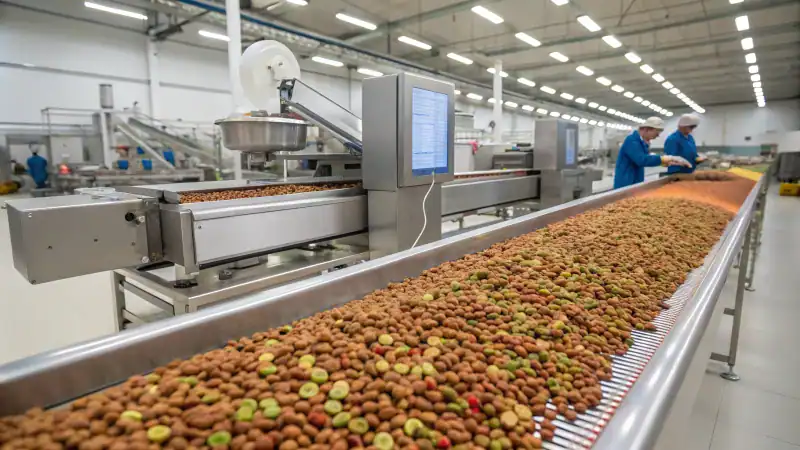
Why Food Formulations Are Becoming More Complex in 2026
Global food trends are moving rapidly toward health-oriented and functionality-driven products. Consumers increasingly expect foods that support digestion, metabolic health, immunity, and clean nutrition while maintaining appealing taste and texture.
Growth of High-Fiber and Gut-Health Ingredients
Manufacturers are adding more functional ingredients into modern food formulations, including:
- Resistant starches
- Prebiotic fibers
- Soluble dietary fibers
- Plant proteins
- Natural hydrocolloids
- Fermented ingredients
These ingredients improve nutritional value but significantly increase formulation complexity during production.
For example, resistant starch and prebiotic blends can rapidly alter viscosity under heat and shear conditions, creating unstable flow behavior inside processing equipment.
Reduced Sodium and Sugar Formulations
The push for healthier processed foods has accelerated the use of:
- Potassium salt replacements
- Natural flavor enhancers
- Monk fruit extracts
- Stevia systems
- Fermentation-derived sweetness modifiers
Unlike traditional formulations, these ingredients are highly sensitive to thermal processing conditions. Even minor temperature deviations during cooking or extrusion may negatively affect flavor balance, texture, or mouthfeel.
This shift is forcing every modern food production line factory to rethink equipment precision, thermal control, and process stability.
Functional Foods Require Greater Precision
Consumers no longer buy food solely for calories or convenience. Functional performance has become a major purchasing driver.
Manufacturers now develop products targeting:
| Functional Goal | Common Ingredients |
|---|---|
| Digestive health | Prebiotics, resistant starch |
| Sugar reduction | Natural sweeteners |
| High protein | Plant proteins, whey proteins |
| Clean label | Natural additives |
| Immune support | Functional nutrients |
Caption: Functional food trends are driving major formulation complexity in modern manufacturing.
As formulations become more sophisticated, traditional processing equipment struggles to maintain consistent product quality across large-scale production runs.
Why Traditional Food Production Lines Face Operational Challenges
Many conventional processing systems were originally designed for stable, standardized recipes with predictable thermal and rheological behavior.
Modern formulations no longer behave that way.
Rapid Viscosity Changes During Processing
One of the biggest challenges in 2026 food production is viscosity instability.
High-fiber and hydrocolloid-rich recipes can experience:
- Sudden thickening
- Shear-sensitive flow changes
- Inconsistent hydration
- Uneven ingredient dispersion
Traditional mixers and heating systems often cannot react quickly enough to these rapid formulation changes.
As a result, manufacturers may experience:
- Product inconsistency
- Texture variation
- Equipment clogging
- Reduced throughput
- Increased waste
Temperature Sensitivity in Low-Sodium and Low-Sugar Products
Reduced sodium and sugar formulations are far more thermally sensitive than conventional processed foods.
Small thermal fluctuations can lead to:
- Flavor imbalance
- Bitter aftertaste
- Texture collapse
- Protein destabilization
- Reduced shelf stability
Traditional food factory production line systems with broad thermal control ranges often lack the precision necessary for these modern formulations.
Inconsistent Product Texture
Texture has become one of the most important consumer acceptance factors.
In products such as:
- Functional snacks
- High-protein extruded foods
- Nutritional cereals
- Gut-health formulations
minor process instability can dramatically alter final product texture.
This creates serious quality control challenges for food manufacturers attempting to scale advanced formulations globally.
Many companies investing in industrial food processing equipment are now prioritizing intelligent process control and formulation adaptability over simple production capacity expansion.
How Advanced Shear Mixing Technology Solves Modern Formulation Challenges
To handle increasingly complex formulations, advanced food processing systems are integrating high-precision shear mixing technologies.
What Is High-Precision Shear Mixing?
High-shear mixing systems use controlled mechanical force to rapidly disperse, hydrate, emulsify, and stabilize ingredients during processing.
Technologies such as DCN Jet Cook systems improve:
- Ingredient hydration efficiency
- Viscosity stability
- Thermal uniformity
- Particle dispersion
- Texture consistency
This becomes especially important when processing fiber-rich or protein-enhanced formulations.
Benefits for Functional Food Manufacturing
Advanced shear mixing offers several operational advantages:
| Processing Challenge | High-Shear Mixing Solution |
|---|---|
| Ingredient clumping | Rapid dispersion |
| Uneven hydration | Uniform mixing |
| Viscosity spikes | Controlled flow behavior |
| Texture inconsistency | Stable product structure |
| Heat transfer variation | Improved thermal distribution |
Caption: Advanced shear mixing systems help stabilize modern functional food formulations.
These systems enable manufacturers to maintain product consistency even when formulations contain difficult functional ingredients.
Improved Production Stability
Modern food manufacturing production line systems increasingly combine shear mixing with automated process monitoring to maintain stable production conditions.
Benefits include:
- Reduced batch variation
- Lower material waste
- Improved product repeatability
- Faster formulation changeovers
- Higher production efficiency
This technological shift is transforming how industrial food production lines are designed and optimized.
The Importance of Real-Time Viscosity Monitoring
One of the most important developments in modern food processing industry machinery is real-time rheological monitoring.
Why Viscosity Matters
Viscosity directly affects:
- Mixing behavior
- Heat transfer
- Extrusion performance
- Product texture
- Filling accuracy
- Drying efficiency
Without accurate monitoring, small viscosity shifts can quickly destabilize the entire production process.
Intelligent Monitoring Systems
Modern food processing production line systems now incorporate:
- Inline viscosity sensors
- Automated pressure monitoring
- AI-assisted recipe correction
- Dynamic thermal control
- Automated feed rate adjustment
These systems continuously analyze process conditions and adjust equipment parameters in real time.
This allows manufacturers to maintain highly stable production environments despite fluctuating ingredient behavior.
Better Product Consistency
Real-time monitoring helps manufacturers achieve:
- Stable texture profiles
- Uniform moisture content
- Consistent expansion rates
- Predictable mouthfeel
- Improved shelf-life performance
This is especially critical for global food brands requiring standardized quality across multiple factories and international markets.
How Food Extrusion Technology Is Evolving in 2026
Extrusion technology remains one of the most important processing methods in modern food manufacturing.
Smart Extrusion Systems
Modern food extrusion machine factory systems now integrate:
- AI-assisted parameter optimization
- Multi-zone thermal management
- Precision screw configuration
- Automated moisture balancing
- Real-time density monitoring
These improvements help manufacturers process highly complex formulations while maintaining product consistency.
Better Adaptability for Functional Ingredients
Advanced extrusion systems can now handle:
- High-fiber recipes
- Plant-based proteins
- High-moisture formulations
- Nutritional fortification systems
- Clean-label ingredients
This flexibility allows food production line manufacturers to support increasingly diversified product portfolios.
Enhanced Energy Efficiency
New extrusion systems also improve sustainability performance through:
- Lower thermal loss
- Reduced water consumption
- Optimized mechanical energy transfer
- Faster startup times
Energy-efficient food processing systems are becoming increasingly important as manufacturers face rising operational costs and sustainability pressures.
Why Automation and Intelligent Control Are Becoming Essential
The complexity of modern food formulations is accelerating the adoption of intelligent manufacturing technologies.
AI-Assisted Process Optimization
Artificial intelligence systems can now analyze:
- Ingredient variability
- Temperature fluctuations
- Moisture levels
- Viscosity trends
- Production speed
The system then adjusts production parameters automatically to stabilize processing conditions.
Reduced Human Error
Automation improves operational consistency by reducing manual intervention during:
- Recipe changes
- Process startup
- Thermal adjustment
- Ingredient dosing
This helps manufacturers improve product reliability while reducing labor dependency.
Faster Product Innovation
Flexible automated food processing systems allow manufacturers to rapidly develop and commercialize new formulations without requiring complete production line redesigns.
Companies investing in advanced food processing production line technologies gain stronger adaptability in fast-changing consumer markets.
The Future of Industrial Food Machinery
The food industry is entering an era where formulation science and equipment engineering are becoming deeply interconnected.
Future industrial food machinery will increasingly focus on:
- Intelligent process adaptation
- Real-time formulation analytics
- Predictive maintenance
- Flexible modular production
- Sustainable energy optimization
Traditional production systems built around fixed processing assumptions will struggle to compete in this evolving environment.
Manufacturers seeking scalable innovation increasingly require highly adaptive food production line machinery capable of handling diverse formulations without sacrificing efficiency or product quality.
FAQ
Why are modern food formulations more difficult to process?
Modern formulations contain functional ingredients such as resistant starches, fibers, and sugar substitutes that create unstable viscosity behavior and higher thermal sensitivity during production.
What challenges do high-fiber formulations create?
High-fiber recipes can rapidly change viscosity, causing inconsistent mixing, unstable extrusion performance, texture variation, and increased processing difficulty.
Why is temperature precision important in low-sugar products?
Reduced sugar and sodium formulations are highly sensitive to thermal processing. Small temperature deviations can negatively affect flavor, texture, and product stability.
What is high-shear mixing technology?
High-shear mixing uses controlled mechanical force to rapidly hydrate and disperse ingredients, improving formulation stability and processing consistency.
How does real-time viscosity monitoring improve production?
Real-time monitoring allows automated systems to detect viscosity changes instantly and adjust process parameters to maintain stable product quality.
Why is automation important in modern food manufacturing?
Automation improves production consistency, reduces human error, increases flexibility, and helps manufacturers process increasingly complex formulations efficiently.
Why Meiteng Supports Next-Generation Food Manufacturing
Meiteng specializes in advanced food processing systems and intelligent industrial food machinery solutions designed for modern food manufacturing challenges. As a professional food production line manufacturer, Meiteng provides scalable equipment solutions for extrusion processing, functional food production, snack manufacturing, cereal processing, and customized food factory production line projects. By combining precision engineering, intelligent control systems, and advanced process optimization technologies, Meiteng helps food manufacturers improve production efficiency, maintain product consistency, and adapt to rapidly evolving formulation trends in global food markets.
References
- Food and Agriculture Organization of the United Nations
https://www.fao.org/ - Wikipedia: Food Processing
https://en.wikipedia.org/wiki/Food_processing - U.S. Food and Drug Administration
https://www.fda.gov/ - International Food Information Council
https://foodinsight.org/