High Capacity Food Extruder
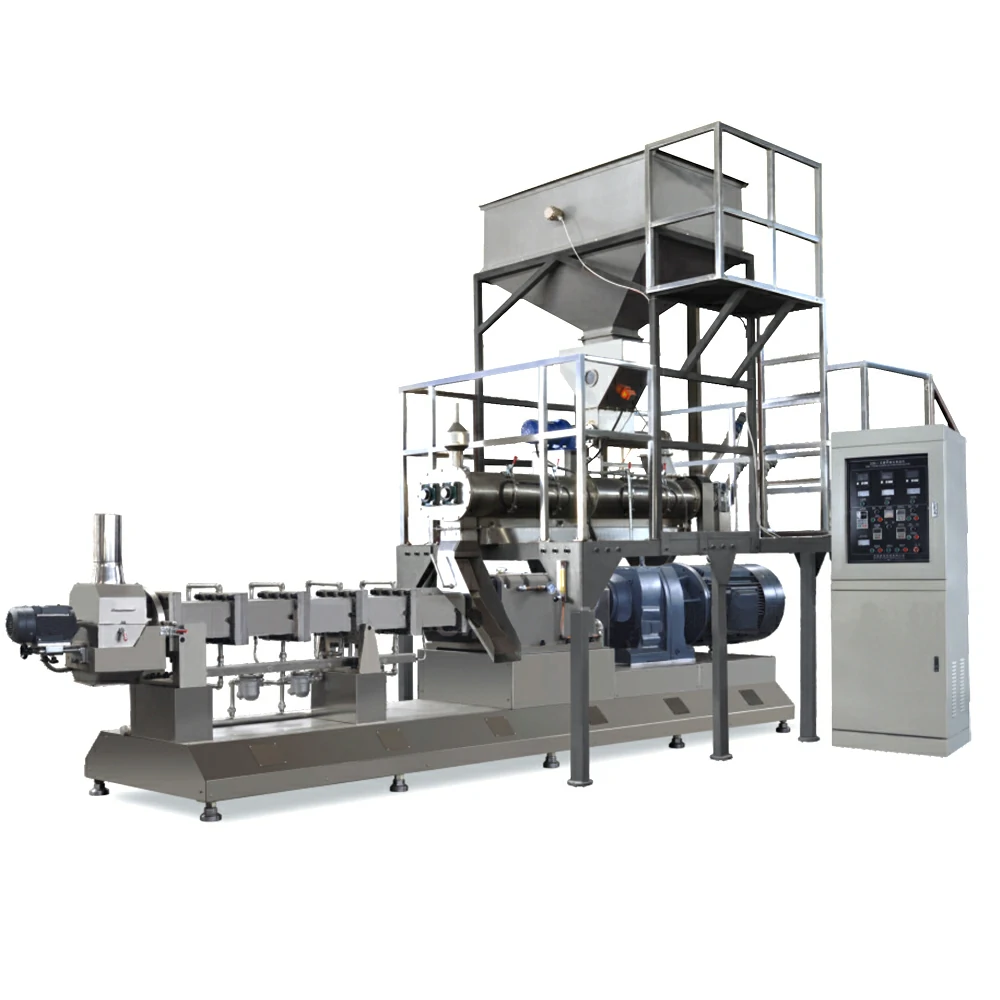
The High Capacity Food Extruder is a twin-screw extrusion machine designed for continuous, large-scale production of expanded snacks, breakfast cereals, pet food, aquatic feed and other extruded food products. The machine combines material conveying, mixing, cooking, extrusion and cutting in one continuous process.
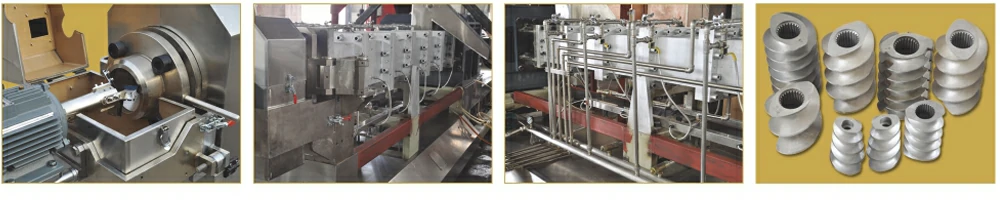
Its twin-screw extrusion system provides stable material conveying and processing conditions, while the multi-section barrel heating system allows process temperatures to be adjusted according to different recipes and products. The extrusion system can also be configured with different screw arrangements, dies and cutting systems to meet different production requirements.
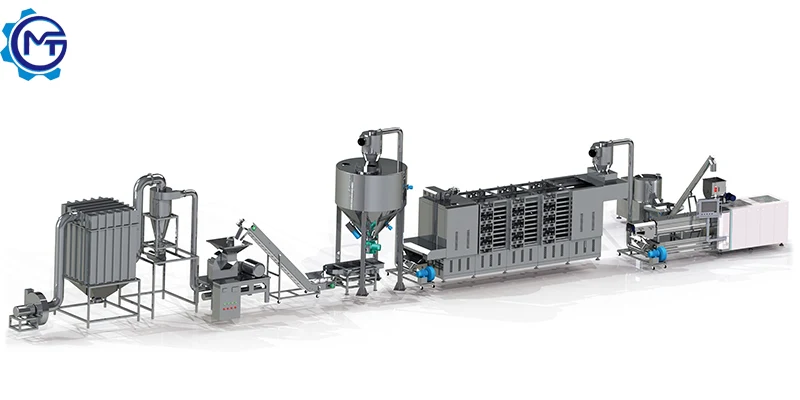
Meiteng can supply the high capacity food extruder as a standalone machine or integrate it with feeding, mixing, drying, frying, seasoning, cooling and packing equipment to form a complete food processing line.
High Capacity Food Extruder Specifications
| Parameter | Specification |
| Model | MT100 |
| Machine Type | Twin Screw Food Extruder |
| Production Capacity | 800-1200 kg/h |
| Main Motor Power | 110 kW |
| Total Installed Power | 155 kW |
| Screw Diameter | Ø100 mm |
| Screw L/D Ratio | 19:1 |
| Barrel Material | Alloy sleeve / confirmed material |
| Main Machine Material | Stainless steel / confirmed material |
| Control System | PLC + Touchscreen |
| Voltage | 380V / 50Hz / 3Ph |
| Machine Dimensions | 5650 × 1250 × 1445 mm |
| Heating Method | Electric heating/steam heating |
| Screw Type | Twin Screw |
| Cutting System | Adjustable internal cutter |
| Suitable Materials | Grain flours, cereals, starch blends and formulated feed materials |
| Finished Products | Puffed snacks, cereals, pet food, aquatic feed and other extruded products |
Technical specifications may vary according to the selected model, raw material formulation, production capacity and machine configuration.
Explore more food extruder machines.
What Is the High Capacity Food Extruder Used For?
The high capacity food extruder is designed for continuous extrusion processing where raw materials need to be mixed, cooked, pressurized, shaped and cut into finished products.
Puffed Snack Production
The extruder can process cereal- and starch-based formulations into expanded snacks with different shapes and sizes. Different dies and cutting configurations can be selected for products including tubes, loops, shells, balls and other shaped snacks.
Breakfast Cereal Production
For breakfast cereal production, the extrusion process provides controlled cooking and shaping before subsequent drying, coating or flavoring. The final product shape and texture can be adjusted through formulation and extrusion parameters.
Pet Food Production
With the appropriate screw configuration, die and cutter, the machine can process formulated pet food mixtures into expanded dry pet food products. Product size, shape and density can be adjusted according to the required specification.
Aquatic Feed Production
The extruder can be configured for floating or sinking aquatic feed production. Extrusion conditions, moisture content, die design and cutting parameters affect product expansion, density and final pellet characteristics.
Expanded Food Ingredients
The machine can also produce expanded grain and starch bases for further processing, coating, seasoning or other food applications.
Suitable Raw Materials
The High Capacity Food Extruder is suitable for a range of grain-, cereal- and starch-based formulations. The exact material compatibility depends on the recipe, moisture content, required processing temperature and selected screw configuration.
Commonly processed materials include:
- Corn and corn grits
- Rice
- Wheat
- Wheat flour
- Corn starch
- Potato starch
- Tapioca starch
- Cereal blends
- Grain flour blends
- Soy-based formulations
- Pet food formulations
- Aquatic feed formulations
Meiteng can recommend the extrusion configuration according to the raw material formulation and target finished product.
Finished Products
The same extrusion platform can be configured for different product formats by changing the die, screw configuration and cutting system.
Typical finished products include:
- Corn puffs
- Expanded snack pellets
- Tubular snacks
- Ring-shaped snacks
- Shell-shaped snacks
- Ball-shaped snacks
- Breakfast cereals
- Expanded cereal products
- Pet food kibble
- Floating fish feed
- Sinking aquatic feed
- Expanded grain products
Product shape, size, density and expansion depend on the raw material formulation, moisture content, extrusion temperature, screw speed, pressure, die design and cutting configuration.

How Does the High Capacity Food Extruder Work?
The food extruder uses two screws rotating in the same direction inside a heated barrel. Raw material enters the extrusion system through the feeding section and is continuously conveyed forward by the screws.
During the extrusion process, the material is mixed and processed under controlled temperature and pressure. The barrel heating system provides the required thermal conditions, while the screw configuration controls material conveying, mixing and shearing.
As the processed material reaches the die, pressure forces it through the die opening. When the material exits the die, the sudden pressure change causes expansion and forms the required product shape. An adjustable cutter then cuts the extruded product to the required length.
The basic process is:
Feeding → Conveying → Mixing → Heating → Cooking → Pressurization → Die Extrusion → Cutting → Further Processing
Depending on the product, the extruder can be connected to downstream drying, frying, seasoning, cooling or packing equipment.
Twin Screw Extrusion System
The twin-screw system is designed for continuous conveying, mixing and extrusion of different food formulations.
Screw Diameter
Screw Diameter: 100 mm
Screw diameter affects the working volume and processing capacity of the extrusion system. A larger screw diameter generally provides a greater processing volume, while the final capacity also depends on raw material characteristics, formulation and operating conditions.
Screw L/D Ratio
L/D Ratio: 19:1
The screw length-to-diameter ratio affects material residence time, mixing, cooking and extrusion performance. The appropriate L/D configuration is selected according to the processing requirements of the target product.
Screw Configuration
Different screw elements can be arranged according to the characteristics of the raw material and the required extrusion process.
The screw configuration can be designed for:
- Material conveying
- Mixing
- Kneading
- Shearing
- Cooking
- Pressure building
- Controlled extrusion
The final screw arrangement should be determined according to the formulation and product requirements rather than using one configuration for every product.
Temperature and Process Control
The extrusion process requires stable control of temperature, feeding rate, screw speed and other operating conditions.
The barrel is divided into controlled heating sections so that different processing stages can operate at the required temperatures.
Temperature Range: 50–180°C
The control system can be configured to monitor and adjust key operating parameters, including:
- Feeding speed
- Screw speed
- Barrel temperature
- Extrusion conditions
- Cutting speed
- Production status
Different recipes may require different temperature, moisture and screw-speed settings. Meiteng can provide recommended operating parameters based on the raw material and finished product.
Adjustable Cutting System
The cutting system is installed at the extrusion outlet and is used to control the length and shape of the extruded product.
The cutter position and cutting speed can be adjusted according to the required product format.
Different cutter and die configurations can be selected for:
- Short snacks
- Long tubular products
- Ring-shaped products
- Ball-shaped products
- Cereal products
- Feed pellets
The final cutting configuration depends on the die opening, product expansion and required finished-product dimensions.
Control System
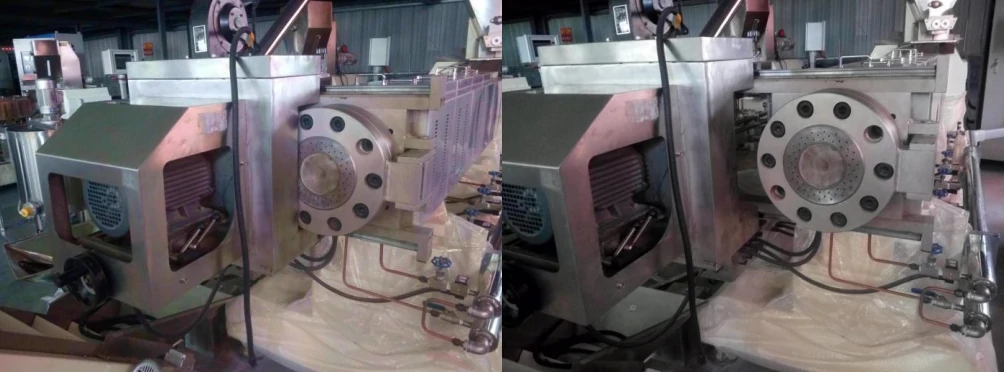
The High Capacity Food Extruder is equipped with an automated control system for centralized monitoring and operation.
PLC Control
The PLC-based system manages the main operating parameters and allows operators to monitor the extrusion process through a touchscreen interface.
The control system can be configured to manage:
- Feeding
- Screw operation
- Barrel heating
- Temperature settings
- Cutter operation
- Production statuThe system allows different process parameters to be set for different recipes and moisture levels, helping maintain consistent extrusion conditions during continuous production.
Control System: PLC + Touchscreen
PLC Brand: Siemens/Delta
Touchscreen Brand: Siemens/Delta
Inverter Brand: Delta
Machine Material and Barrel Design
The machine is designed for continuous industrial production and uses wear-resistant components in key extrusion areas.
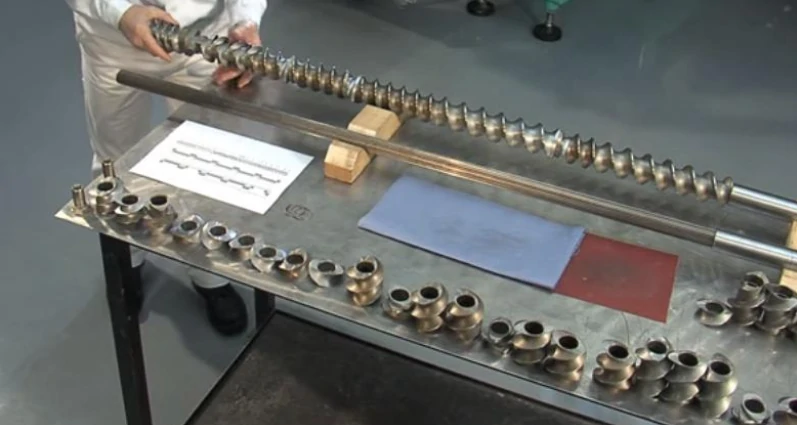
The barrel sections use replaceable alloy sleeves to reduce maintenance difficulty when the internal working surface becomes worn.
Replaceable Alloy Sleeves
The alloy sleeves are designed as replaceable wear components. Instead of replacing the complete barrel assembly, worn sleeve sections can be serviced or replaced according to the machine configuration.
This design helps simplify maintenance and reduce potential downtime.
Food Contact Materials
Food Contact Material: Confirmed material
The exact material specification should be selected according to the product type, food-contact requirements and applicable production standards.
High Capacity Food Extruder for Complete Food Production Lines
The food extruder can operate as a standalone machine or be integrated into a complete production line.
A typical food extrusion process may include:
Raw Material Preparation → Mixing → Feeding → Extrusion → Drying / Frying → Seasoning → Cooling → Packing
Depending on the application, Meiteng can configure complete production solutions for:
- Pet food production
- Floating fish feed production
- Corn puff snack production
- Breakfast cereal production
- Fortified rice production
- Cheetos and Kurkure production
- Textured vegetable protein production
- Bread crumb production
- Modified starch processing
The extruder configuration, downstream equipment and production capacity are selected according to the final product and production target.
Optional Configurations
The High Capacity Food Extruder can be configured according to production capacity, raw material characteristics and finished-product requirements.
Available options may include:
- Different screw configurations
- Different screw diameters
- Different die designs
- Adjustable cutting systems
- Different barrel sections
- Automatic feeding system
- Pre-conditioning system
- Vacuum exhaust system
- Additional temperature-control sections
- Stainless-steel contact parts
- Customized control system
- Downstream drying equipment
- Frying equipment
- Seasoning equipment
- Cooling equipment
- Packing equipment
The final configuration is determined according to the raw material, target capacity, product shape, moisture content, extrusion conditions and downstream process.
How to Choose the Right Food Extruder Model?
The required production capacity is not the only factor when selecting a food extruder.
Meiteng recommends evaluating the following parameters:
1. Target Capacity
Confirm the required hourly production output first.
Required Capacity: 800-1200 kg/h
The selected extruder should provide sufficient processing capacity for the planned production volume while allowing stable operation.
2. Raw Material
Different materials behave differently during extrusion. Grain flour, starch, cereal blends, pet food formulations and aquatic feed formulations may require different screw configurations and process conditions.
3. Finished Product
The required product shape, size, density and expansion determine the appropriate die and cutting system.
4. Moisture Content
Moisture affects material flow, cooking, expansion and final product density. The extrusion configuration should therefore be matched to the actual formulation.
5. Downstream Process
If the extruded product requires drying, frying, seasoning, cooling or packing, the extruder should be selected together with the downstream equipment.
Installation Requirements
Before installation, the production site should provide sufficient space for the machine, operator access, raw material feeding and product discharge.
Basic installation requirements include:
- Level and stable installation floor
- Adequate electrical power supply
- Suitable ventilation
- Required water supply where applicable
- Space for raw material feeding
- Space for product discharge
- Operator access around the machine
- Maintenance access
- Space for control cabinet
- Connection space for upstream and downstream equipment
Electrical Requirements
Voltage: 380V / 50Hz / 3Ph or as request
Voltage and electrical configuration can be customized according to the destination market and project requirements.
Installation Space
Machine Dimensions: 5650H× 1250W × 1445H mm
The actual installation area should be larger than the machine dimensions to provide sufficient operating and maintenance space.
For a complete production line, the installation layout should also consider the position of the mixer, feeding system, dryer, fryer, seasoning machine, cooling system and packing equipment.
Maintenance Requirements
Regular cleaning and inspection help maintain stable extrusion performance and reduce unexpected downtime.
Daily Maintenance
- Clean residual material after production
- Check the feeding system
- Inspect the die and cutter
- Check abnormal noise or vibration
- Inspect product output
- Clean accessible food-contact surfaces
Regular Maintenance
- Inspect screw elements
- Check barrel and alloy sleeves
- Inspect gearbox lubrication
- Check bearings and transmission components
- Inspect heating elements
- Check temperature sensors
- Inspect electrical connections
- Check cutter blades and adjustment mechanism
Periodic Maintenance
Worn components should be inspected and replaced according to operating hours, material characteristics and actual wear conditions.
Maintenance intervals may vary according to production intensity and raw material formulation.
Main Wear Parts
The main wear parts depend on the machine configuration and production conditions.
Common replacement components include:
- Screw elements
- Alloy barrel sleeves
- Dies
- Cutter blades
- Heating elements
- Sealing components
- Bearings
- Temperature sensors
Meiteng can supply replacement parts according to the machine model and original configuration.
When ordering spare parts, the machine model and component specification should be confirmed to ensure compatibility.
About MT Machinery
Meiteng Machinery is a leading provider of industrial food processing equipment, specializing in twin screw and single screw food extruders. With over 15 years of experience, our machines are exported to more than 50 countries, trusted for high efficiency, stable performance, and long-term reliability.
The company has more than 15 years of experience in food processing machinery and supplies equipment for customers in international markets.
Advantages of Meiteng High Capacity Food Extruder
-
High production capacity – Designed for large‑scale food processing with consistent, continuous output.
-
Reliable quality – Stable extrusion pressure and temperature control ensure uniform structure and texture of finished products.
-
Easy operation & maintenance – Intuitive control interface and modular design simplify operation and servicing.
-
Versatile raw material handling – Capable of processing a wide range of grain flours and starch blends.
-
Durable components – Wear‑resistant screw and barrel materials increase service life and reduce downtime.
Frequently Asked Questions
Can one food extruder produce different snack shapes?
Yes. Different product shapes can be achieved by changing the extrusion die and adjusting the cutting configuration. The screw configuration and process parameters may also need to be adjusted for different formulations and product requirements.
How do I select the right extruder for my production line?
Model selection depends on the required output, raw material, formulation, product type, product size, expansion level and planned operating hours. Meiteng can recommend a suitable model after reviewing these production requirements.
Can the extruder be used for a new product that is not currently listed?
The suitability depends on the raw material and extrusion characteristics of the product. Meiteng can evaluate the formulation and processing requirements and determine whether the existing extrusion system can be configured for the application.
Can the machine be integrated with my existing production line?
Yes. The extruder can be configured to connect with existing feeding, mixing, drying, frying, seasoning, cooling or packing equipment. Connection dimensions, capacity and process flow should be confirmed during technical planning.
What information is needed to prepare a food extruder quotation?
Meiteng normally needs the target product, raw material, required capacity, product size and shape, production hours, power supply and whether a standalone machine or complete production line is required.
Can the machine configuration be changed after production starts?
The machine configuration should be determined before manufacturing because screw arrangement, barrel sections, die design and other components affect the extrusion process. For future product changes, replaceable dies and selected components can provide additional production flexibility.
What happens if the machine requires replacement parts?
Replacement parts can be supplied according to the machine model and component specification. Wear-part requirements can also be discussed during the equipment selection stage so commonly required parts can be prepared in advance.
How is the extruder packaged for international shipment?
The machine is prepared according to its structure, dimensions and shipping requirements. Components may be separated where necessary to facilitate loading, transportation and installation.
Application
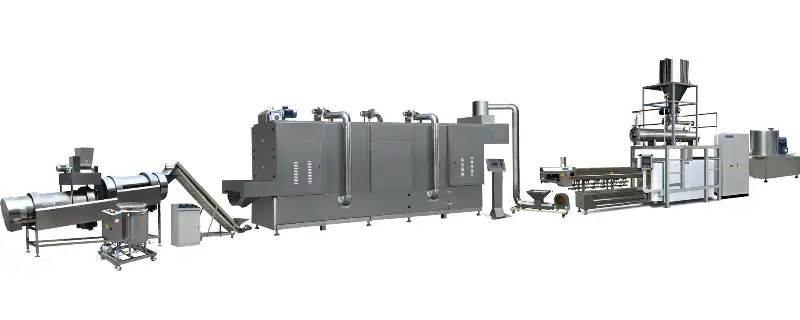
Pet Food Processing Line
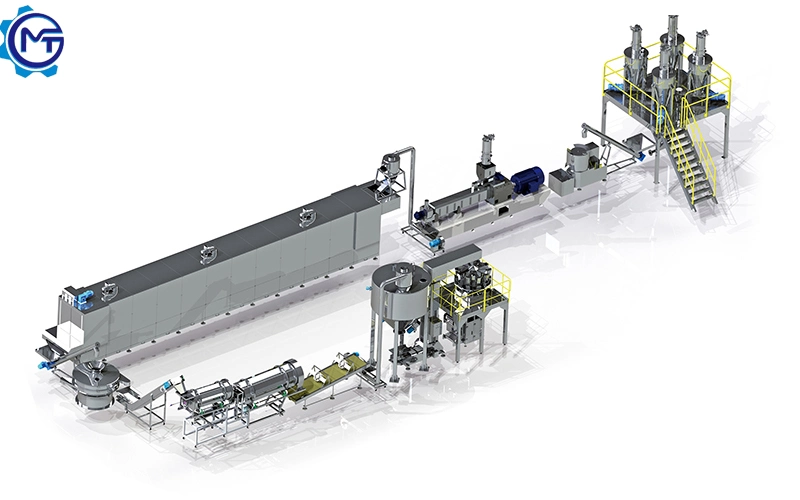
Floating Fish Feed Production Line
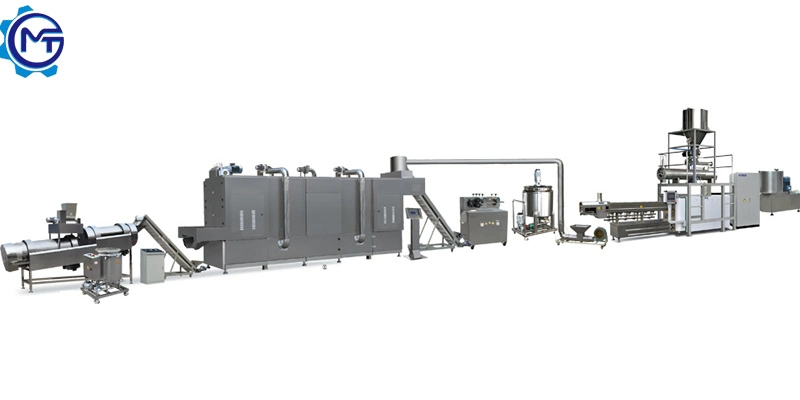
Corn Puff Snacks Production Line
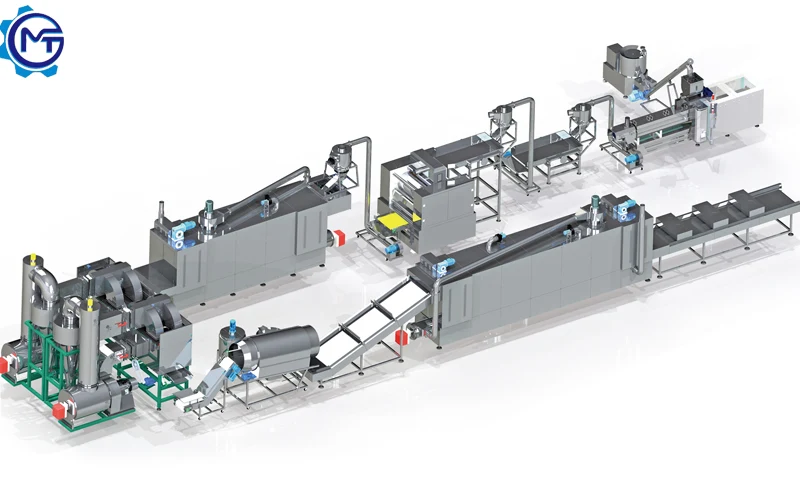
Breakfast Cereals Corn Flakes Production Line
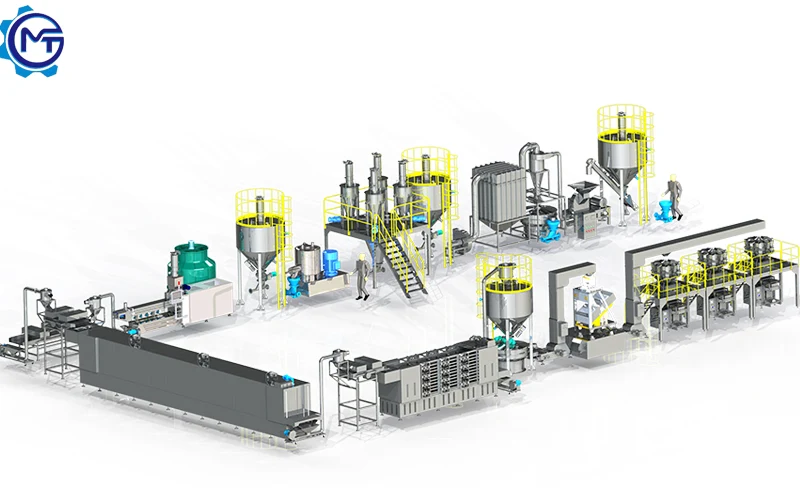
Fortified Rice Production Line
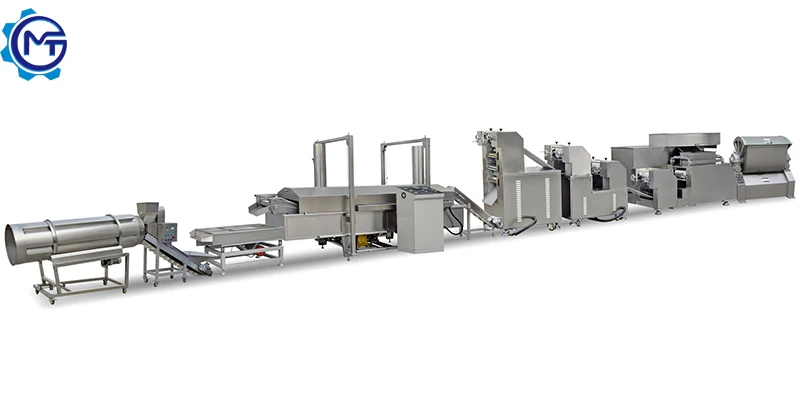
Fried Snacks Processing Line
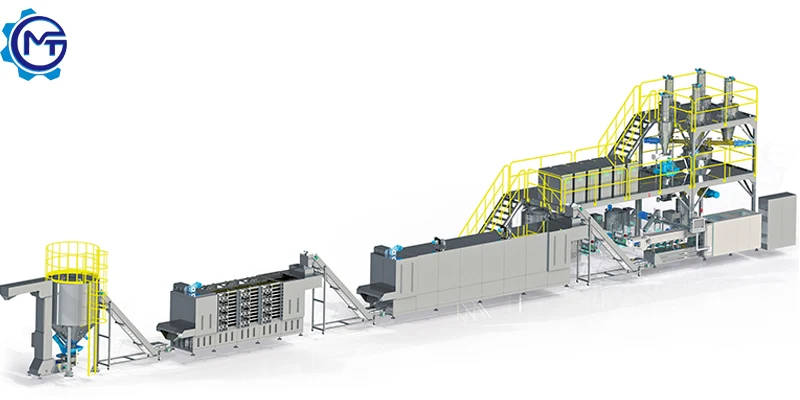
Textured Vegetable Protein Line
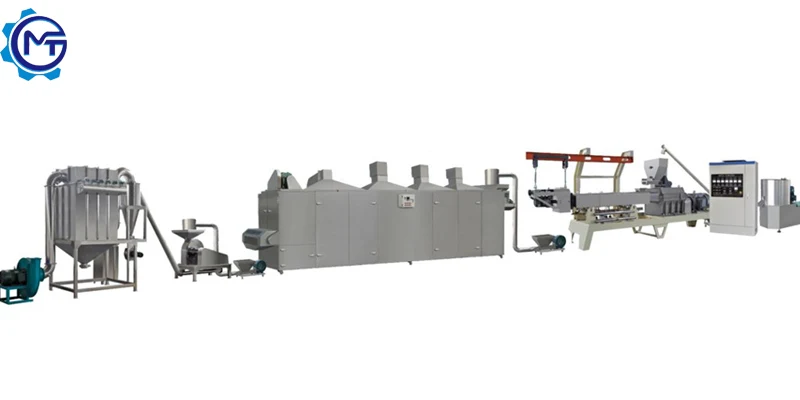
Baby & Nutritional Powder Processing Line
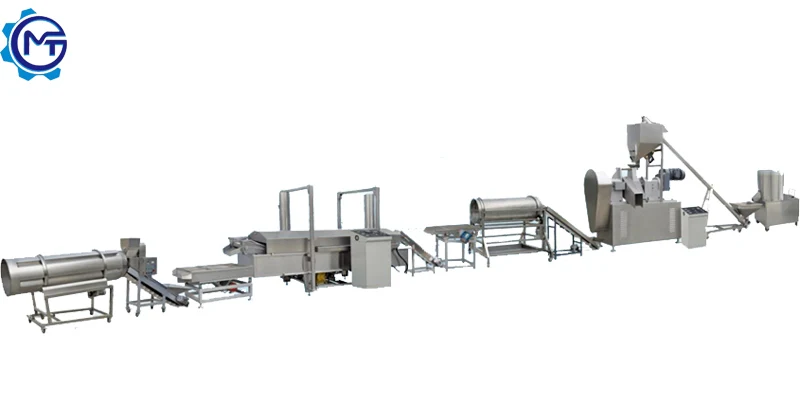
Cheetos & Kurkure Processing Line
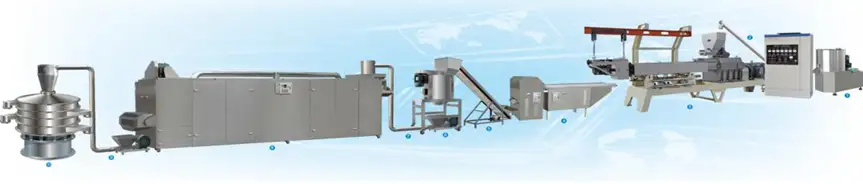
Bread Crumb Production Line