How Do You Choose the Right Food Processing Machine Supplier in the USA for Long-Term Growth?
June 10, 2026
The answer is simple: the right food processing machine supplier is not necessarily the one offering the lowest price, but the one capable of delivering reliable equipment, scalable production solutions, technical support, and long-term operational value. As food manufacturers face increasing pressure to improve efficiency, ensure food safety, and meet changing consumer demands, selecting the right supplier becomes a strategic business decision. Whether you are launching a new production facility or expanding existing operations, the supplier you choose will directly influence productivity, product quality, and profitability.
The food industry in the United States continues to evolve rapidly. Rising labor costs, stricter food safety regulations, and growing demand for automation are driving manufacturers toward advanced processing solutions. As a result, investments in modern industrial food processing equipment and automated production systems have become essential for maintaining competitiveness.
Why Equipment Selection Matters More Than Ever
Food production today requires far more than basic processing machinery. Manufacturers need integrated systems that can support consistent quality, reduce waste, and improve throughput.
A poorly designed production line may create bottlenecks, increase maintenance costs, and limit future expansion opportunities. In contrast, a well-engineered system helps businesses optimize production while maintaining compliance with food safety requirements.
The Shift Toward Automation
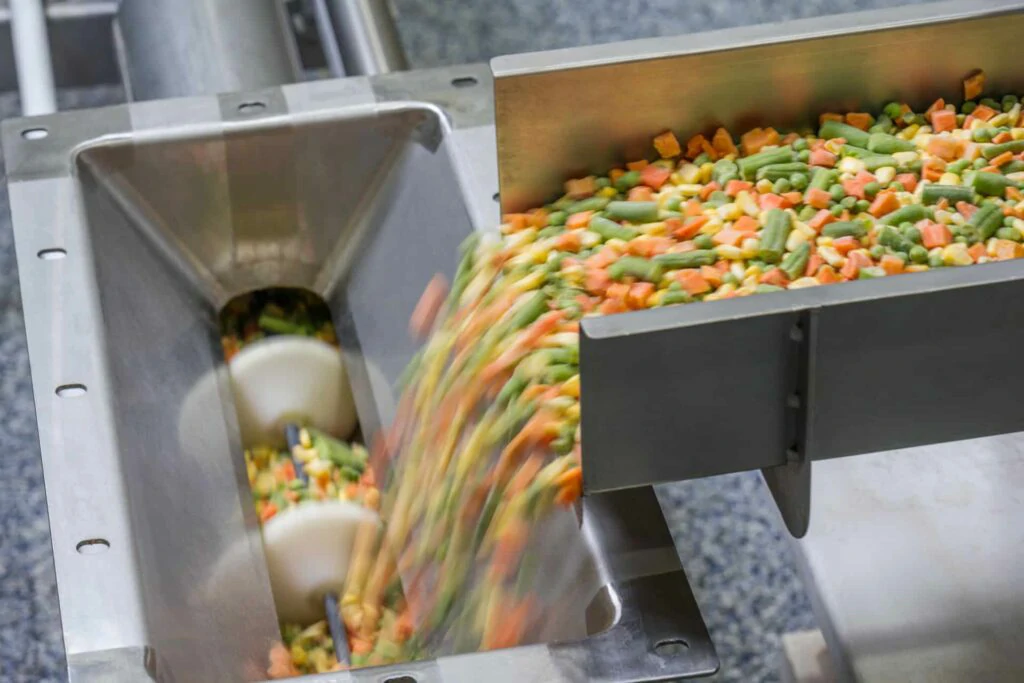
Automation is becoming a major driver of growth across the food industry. Modern food processing machines can perform tasks that previously required significant manual labor, including mixing, forming, cutting, cooking, packaging, and quality inspection.
For example, snack food manufacturers often implement automated conveying and packaging systems to increase output while maintaining product consistency.
Meeting Food Safety Expectations
Consumers and regulatory authorities expect high standards of food safety. Equipment design plays a crucial role in achieving these objectives.
Hygienic construction, stainless steel surfaces, easy cleaning features, and contamination prevention mechanisms have become standard requirements for modern food manufacturing equipment.
What Makes a Reliable Food Processing Machine Supplier?
Choosing a supplier should involve a comprehensive evaluation of technical capabilities rather than simply comparing equipment specifications.
A strong supplier understands manufacturing processes, product characteristics, and long-term production goals.
Industry Experience and Engineering Expertise
Experienced suppliers can provide recommendations based on real-world production scenarios rather than generic equipment catalogs.
For instance, a frozen food producer requires different process solutions than a bakery, meat processor, or confectionery manufacturer.
Suppliers with broad project experience can often identify opportunities to improve efficiency before installation even begins.
Customization Capabilities
Every food factory operates under unique conditions.
Production volume, facility layout, product type, and future expansion plans all influence equipment requirements. A supplier capable of designing customized food production lines can deliver greater operational value than a supplier offering only standard machines.
Technical Support and After-Sales Service
Equipment performance depends not only on machine quality but also on the availability of technical support.
Fast response times, spare parts availability, remote diagnostics, and training programs help ensure long-term production stability.
Understanding the Different Types of Food Production Equipment
Modern food factories rely on a wide range of machinery to transform raw materials into finished products.
The level of automation and integration varies depending on the product category and production scale.
Processing Equipment
Processing equipment handles the primary transformation of ingredients. This category includes mixers, grinders, cutters, cookers, extruders, and forming machines.
These systems form the foundation of most food production machinery installations.
Conveying and Material Handling Systems
Efficient material movement is essential for maintaining production flow.
Conveyors, elevators, and transfer systems help reduce manual handling while improving consistency throughout the manufacturing process.
Packaging and End-of-Line Solutions
Packaging equipment protects products, extends shelf life, and prepares goods for distribution.
Integrated packaging systems also improve traceability and inventory management capabilities.
Comparing Common Food Processing Equipment Categories
Caption: Typical Equipment Categories Used in Modern Food Manufacturing Facilities
| Equipment Category | Primary Function | Typical Application | Key Benefit |
|---|---|---|---|
| Mixing Equipment | Ingredient blending | Bakery, snacks, prepared foods | Product consistency |
| Cooking Equipment | Thermal processing | Meat, ready meals, sauces | Food safety and quality |
| Forming Equipment | Product shaping | Snacks, confectionery, pet food | Production efficiency |
| Packaging Systems | Product packaging | All food sectors | Shelf life and logistics |
| Conveying Systems | Material transportation | Integrated production lines | Workflow optimization |
The optimal equipment combination depends on production goals, product characteristics, and operational requirements.
Why Integrated Food Production Lines Are Becoming the Industry Standard
Many manufacturers are moving away from standalone machines and adopting fully integrated production systems.
Integrated food production lines reduce manual intervention, improve process control, and increase overall efficiency.
For example, a snack production facility may integrate mixing, forming, frying, seasoning, cooling, and packaging into a continuous automated process.
This approach reduces labor requirements while improving consistency and throughput.
Businesses exploring complete manufacturing solutions often benefit from reviewing advanced food production line machinery options that align equipment selection with specific production objectives and future expansion plans.
Evaluating Food Processing Equipment Suppliers Beyond Price
One of the most common purchasing mistakes is focusing exclusively on equipment cost.
While price is important, it represents only one component of the overall investment.
Total Cost of Ownership
A lower-priced machine may ultimately generate higher costs due to maintenance requirements, downtime, energy consumption, or limited production capacity.
Decision-makers should evaluate:
- Equipment lifespan
- Maintenance requirements
- Production efficiency
- Energy consumption
- Spare parts availability
- Technical support quality
These factors often have a greater impact on profitability than the initial purchase price.
Scalability for Future Growth
Food businesses frequently expand product lines and increase production volumes over time.
Selecting equipment that supports future growth helps avoid costly system replacements and facility redesigns.
Industry Trends Shaping Food Manufacturing Equipment Investments
Several major trends are influencing purchasing decisions across the food industry.
Smart Manufacturing and Digital Monitoring
Modern equipment increasingly incorporates sensors, data analytics, and remote monitoring capabilities.
These technologies help manufacturers identify inefficiencies, predict maintenance requirements, and improve overall operational performance.
Labor Reduction Through Automation
Labor shortages continue to challenge many food manufacturers.
Automated industrial food processing equipment helps reduce dependence on manual labor while improving production consistency.
Greater Demand for Flexible Production
Consumers increasingly seek diverse product offerings and shorter product life cycles.
As a result, manufacturers require flexible food processing machines capable of supporting rapid product changes and smaller production runs.
Companies seeking comprehensive solutions often evaluate a broad portfolio of food processing industry machinery to ensure compatibility across multiple production requirements and product categories.
If you are planning a new factory project or upgrading an existing production line, our team can help identify the most suitable solution for your operation: Contact Us.
How Food Processing Equipment Suppliers Support Business Growth
Reliable food processing equipment suppliers do more than provide machines.
They help manufacturers improve efficiency, optimize production workflows, and adapt to changing market demands.
A strong supplier relationship can contribute directly to long-term competitiveness by providing access to technical innovation, process improvements, and scalable manufacturing solutions.
For growing food companies, the right supplier becomes a strategic partner rather than simply an equipment vendor.
FAQ
What should I look for in a food processing machine supplier?
Key factors include industry experience, engineering capability, equipment quality, customization options, technical support, and long-term service availability.
Why is industrial food processing equipment important?
It improves production efficiency, product consistency, food safety, and operational scalability.
What are food production lines?
Food production lines are integrated systems that combine multiple processing stages into a continuous manufacturing workflow.
How do food processing equipment suppliers help reduce costs?
They provide efficient machinery, automation solutions, technical support, and optimized production systems that improve productivity and reduce waste.
Is automation necessary for modern food manufacturing?
For many manufacturers, automation has become essential for improving efficiency, addressing labor challenges, and maintaining product consistency.
About Meiteng
Meiteng is a professional food production line supplier specializing in advanced processing solutions for global food manufacturers. With extensive experience in equipment design, production line integration, and customized engineering, Meiteng helps businesses improve efficiency, enhance product quality, and achieve sustainable growth. The company provides reliable solutions across a wide range of food processing applications, supporting customers from project planning through installation and long-term operation.
References
Food and Agriculture Organization of the United Nations (FAO)
https://www.fao.org
Wikipedia – Food Processing
https://en.wikipedia.org/wiki/Food_processing
U.S. Food and Drug Administration (FDA) Food Safety Modernization Act
https://www.fda.gov/food/guidance-regulation-food-and-dietary-supplements/food-safety-modernization-act-fsma
Wikipedia – Food Industry
https://en.wikipedia.org/wiki/Food_industry