What Is the Ideal Floating Time for Different Types of Fish Feed Pellets?
July 15, 2026
The ideal floating time of fish feed pellets depends on fish species, feeding habits, and farming conditions. Different aquatic animals require different feed behaviors in water. Some species prefer floating pellets on the surface, while others need slow-sinking or sinking feed that reaches deeper water areas.
For feed manufacturers, controlling pellet buoyancy is not only related to fish nutrition but also depends on production technology, including extrusion processing, raw material formulation, pellet density, and water stability.
With a suitable fish feed production process, manufacturers can produce floating, slow-sinking, and sinking pellets to meet different aquaculture requirements.
Floating Fish Feed: 12 to 24 Hours for Surface Feeding Species
Floating fish feed is mainly designed for fish that naturally feed near the water surface. These pellets remain buoyant after entering the water, allowing farmers to observe feeding activity and adjust feeding amounts more easily.
The recommended floating time is usually 12 to 24 hours, while premium-quality floating pellets can maintain buoyancy for even longer periods under suitable conditions.
Common target species include:
- Tilapia
- Catfish
- Carp
- Trout
- Seabass
Advantages of Floating Feed Pellets
Floating pellets provide several benefits for aquaculture operations:
| Benefit | Description |
|---|---|
| Easy feeding observation | Farmers can monitor fish appetite and adjust feeding quantity |
| Reduced feed waste | Uneaten pellets can be removed before affecting water quality |
| Better feed management | Helps improve feeding efficiency and cost control |
The floating performance of pellets is affected by extrusion parameters, expansion rate, pellet density, and moisture control during production.
Slow-Sinking Fish Feed: Designed for Mid-Water Feeders
Some fish species do not usually feed directly from the water surface. They prefer pellets that slowly move through the water column, allowing them to capture feed naturally.
Slow-sinking pellets typically remain on the surface for only a short period before gradually sinking. Their sinking speed is usually controlled between 0.05 and 0.15 meters per second, depending on pellet design and density.
Common applications include:
- Salmon
- Tuna
- Marine fish species
- Shrimp during specific growth stages
Why Slow-Sinking Feed Requires Precise Production Control
Producing slow-sinking feed requires careful adjustment of:
- Pellet density
- Expansion degree
- Particle size
- Water absorption rate
A well-designed fish feed pellet machine can help manufacturers achieve consistent pellet structure and stable sinking performance.
Sinking Fish Feed: Immediate Sinking for Bottom Feeders
Bottom-feeding aquatic animals require feed that reaches the bottom quickly. For these species, floating time is not desirable because they naturally feed in lower water areas.
Typical target species include:
- Shrimp
- Prawns
- Crabs
- Lobsters
- Bottom-dwelling catfish
- Loaches
The ideal floating time is 0 hours, meaning pellets should sink immediately after entering the water.
However, sinking does not mean rapid disintegration. High-quality sinking pellets need strong water stability and should remain intact for several hours, usually around 2 to 6 hours, depending on feeding conditions.
This allows slow-feeding aquatic animals enough time to consume the feed while reducing nutrient loss.
How Fish Feed Production Technology Controls Floating Time?
Floating behavior is closely related to the manufacturing process. A professional fish feed production line allows manufacturers to adjust pellet characteristics according to different market requirements.
Key factors include:
Extrusion Process
Extrusion is one of the most important technologies affecting pellet buoyancy. During production, temperature, pressure, and moisture levels influence pellet expansion and internal structure.
Higher expansion usually creates lighter pellets with better floating ability.
Raw Material Formula
Different ingredients affect pellet density and water stability. Protein sources, starch content, and oil addition must be balanced to achieve the desired feeding performance.
Pellet Size and Shape
Pellet diameter and shape also influence water movement. Different fish sizes require different pellet specifications to ensure efficient feeding.
Water Stability
High-quality pellets should maintain their shape after entering water. Excessive disintegration can lead to nutrient loss and deteriorate water quality.
Choosing the Right Fish Feed Production Solution
For feed manufacturers, producing different types of pellets requires flexible production equipment.
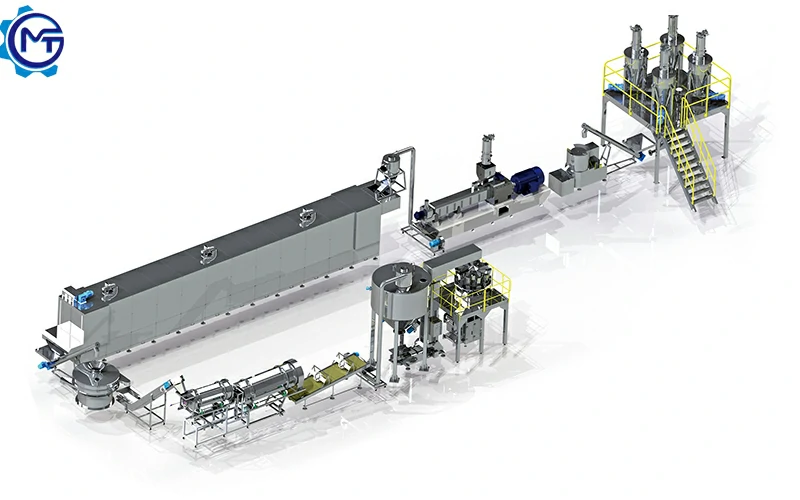
A complete fish feed production line can include:
- Raw material crushing system
- Mixing equipment
- Extruder machine
- Pellet cutting system
- Drying system
- Oil spraying system
- Cooling system
- Packaging equipment
By adjusting production parameters, manufacturers can produce:
- Floating fish feed
- Slow-sinking feed
- Sinking aquatic feed
to serve different aquaculture markets.
Meiteng Helps Produce High-Quality Aquaculture Feed
As aquaculture continues to develop, feed manufacturers need equipment that can provide stable production performance and flexible product options.
Meiteng provides professional fish feed production solutions designed to help customers manufacture high-quality aquatic feed with consistent pellet size, density, and water stability.
By selecting suitable production technology and equipment configuration, feed producers can better meet the requirements of different fish species while improving production efficiency and product competitiveness.
Conclusion
There is no single ideal floating time for all fish feed pellets. The right pellet behavior depends on the feeding habits of different aquatic species.
Floating feed is suitable for surface feeders and usually remains buoyant for 12 to 24 hours. Slow-sinking feed supports mid-water feeding species, while sinking pellets are designed for bottom-feeding animals.
For fish feed manufacturers, controlling floating performance through advanced production technology is essential for producing efficient, market-ready aquaculture feed.