Are Pet Food Quality Control Systems the Key to Safer, More Consistent Pet Food Production?
June 3, 2026
Yes, pet food quality control systems are essential for ensuring safety, consistency, regulatory compliance, and product reliability in modern pet food manufacturing. For any food industry equipment supplier working with B2B clients, these systems are no longer optional; they are a core requirement for maintaining brand reputation and meeting increasingly strict global food safety standards. In practice, a well-designed quality control system helps manufacturers detect contamination risks, maintain nutritional accuracy, stabilize production processes, and ensure every batch of pet food meets predefined specifications. For example, a dry kibble production line serving export markets in Europe must comply with strict microbiological and nutritional standards, while a wet pet food facility supplying domestic retailers may prioritize texture consistency and moisture control.
As global demand for premium pet nutrition continues to rise, manufacturers are investing heavily in advanced monitoring, automation, and integrated inspection systems. This shift is transforming pet food production from a traditional manufacturing process into a highly controlled, data-driven operation.
The Role of Pet Food Quality Control Systems in Modern Manufacturing
Pet food production is a complex process involving raw material selection, extrusion, cooking, drying, flavoring, and packaging. Each stage introduces potential quality risks that must be controlled systematically.
Ensuring Product Safety Across the Production Line
One of the primary functions of pet food quality control systems is to ensure product safety from raw materials to final packaging.
This includes:
- Monitoring microbial contamination
- Detecting foreign materials
- Controlling moisture levels
- Ensuring ingredient traceability
Without proper control systems, even minor deviations in raw material quality can lead to large-scale product recalls.
Maintaining Nutritional Consistency
Pet owners increasingly demand precise nutritional formulations tailored to specific animal needs.
Quality control systems ensure:
- Accurate protein and fat content
- Balanced vitamin and mineral levels
- Stable ingredient ratios across batches
This is especially important for premium brands and export-focused manufacturers.
How Integrated Production Systems Improve Pet Food Quality
Modern manufacturers are shifting toward fully integrated production environments supported by automated monitoring systems.
A reliable food production line manufacturer can design systems that combine processing efficiency with strict quality control standards.
Automation in Ingredient Handling
Raw material handling is one of the most critical stages in pet food manufacturing.
Automated systems help ensure:
- Accurate weighing and batching
- Reduced human error
- Improved traceability of ingredients
Real-Time Monitoring During Processing
Modern food processing systems allow continuous monitoring of temperature, pressure, and moisture content during extrusion and cooking.
These real-time adjustments help maintain product consistency and reduce waste.
Advanced Detection Technologies
Detection systems such as metal detectors, X-ray inspection, and optical sorting play a vital role in eliminating contamination risks.
These technologies are particularly important in high-volume production environments where manual inspection is not feasible.
Key Components of Effective Pet Food Quality Control Systems
A complete quality control system integrates multiple technologies across the entire production process.
A leading food processing machinery suppliers network typically provides equipment that supports end-to-end monitoring and automation.
Raw Material Inspection Systems
Before production begins, raw materials must be inspected for quality and safety.
This includes:
- Moisture testing
- Protein content verification
- Contaminant screening
In-Process Control Systems
During production, continuous monitoring ensures process stability.
Key parameters include:
- Temperature control in extrusion
- Pressure regulation
- Moisture balance
- Cooking time precision
Final Product Testing Systems
Finished pet food products undergo final inspection before packaging.
Tests typically include:
- Nutritional analysis
- Microbiological testing
- Physical appearance checks
- Packaging integrity verification
Application of Pet Food Processing Equipment in Modern Plants
Modern manufacturers rely heavily on specialized machinery to achieve consistent quality output.
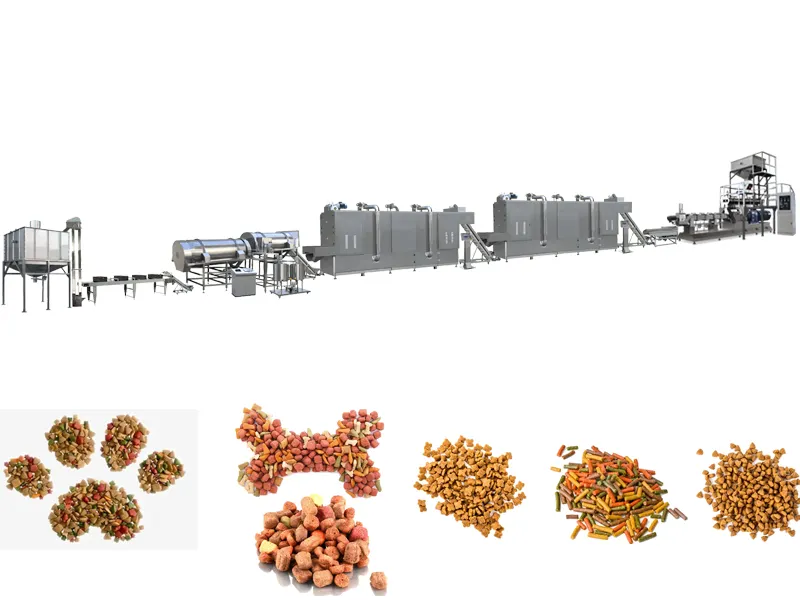
A complete pet food processing equipment setup typically includes grinding, mixing, extrusion, drying, coating, and packaging systems.
Dry Pet Food Production Lines
Dry kibble production requires precise control of moisture and temperature during extrusion and drying stages.
A well-designed pet food production line ensures consistent kibble size, texture, and nutritional balance.
Wet Pet Food Manufacturing Systems
Wet pet food production focuses on sterilization, sealing, and texture consistency.
These systems require strict temperature control and hygienic design to ensure product safety.
Semi-Moist Pet Food Systems
Semi-moist products require specialized moisture control systems to maintain softness while preventing microbial growth.
Why Quality Control Matters in Pet Food Export Markets
Export-oriented manufacturers face stricter regulations than domestic producers.
Different countries enforce different standards for pet food safety, labeling, and nutritional composition.
Compliance With International Standards
Common regulatory frameworks include:
- FDA regulations in the United States
- EU pet food hygiene standards
- ISO food safety management systems
Manufacturers must ensure their production systems are fully compliant to access global markets.
Reducing Risk of Product Recalls
Product recalls can severely damage brand reputation and financial performance.
Strong quality control systems reduce risks by:
- Identifying defects early
- Ensuring traceability
- Maintaining batch consistency
Benefits of Fully Integrated Food Processing Systems
Modern production facilities are increasingly adopting fully integrated systems rather than standalone machines.
A complete food processing systems approach allows manufacturers to optimize efficiency and maintain consistent product quality.
Improved Operational Efficiency
Integrated systems reduce downtime and improve production flow by synchronizing different processing stages.
Lower Production Costs
Automation reduces labor dependency and minimizes material waste.
Enhanced Product Consistency
Standardized processes ensure every batch meets the same quality requirements.
If you are planning to upgrade your production facility or implement advanced quality control solutions, contact our engineering team here for customized support.
Comparison of Traditional vs Modern Pet Food Quality Control Systems
| Feature | Traditional Systems | Modern Integrated Systems |
|---|---|---|
| Inspection Method | Manual sampling | Automated real-time monitoring |
| Contamination Detection | Post-production | In-line detection |
| Data Management | Paper-based records | Digital traceability systems |
| Production Efficiency | Moderate | High |
| Error Rate | Higher | Significantly reduced |
| Compliance Support | Limited | Fully integrated |
| Cost Efficiency | Short-term savings | Long-term optimization |
Future Trends in Pet Food Quality Control Systems
The pet food industry is rapidly evolving with advancements in automation and digital technology.
Smart Manufacturing and IoT Integration
Smart sensors and IoT devices allow manufacturers to track production conditions in real time.
AI-Based Quality Prediction
Artificial intelligence is being used to predict potential quality issues before they occur, reducing waste and improving efficiency.
Sustainable Production Practices
Sustainability is becoming a key focus, with manufacturers optimizing energy use and reducing material waste.
Frequently Asked Questions
What are pet food quality control systems?
They are integrated systems used to monitor, manage, and ensure the safety, consistency, and nutritional quality of pet food during production.
Why are quality control systems important in pet food manufacturing?
They help prevent contamination, ensure nutritional accuracy, and maintain compliance with international food safety standards.
What equipment is used in pet food quality control?
Common equipment includes metal detectors, moisture analyzers, X-ray inspection systems, and automated batching systems.
How do automated systems improve pet food production?
They reduce human error, improve efficiency, and ensure consistent product quality across batches.
Are quality control systems necessary for export markets?
Yes, most international markets require strict compliance with food safety and traceability regulations.
What is the role of processing equipment in quality control?
Processing equipment ensures precise control of temperature, pressure, and moisture, which directly affects product quality.
Why Choose Meiteng?
Meiteng is a professional food industry equipment supplier specializing in advanced pet food production solutions. With extensive experience in designing and manufacturing integrated food processing systems, we provide complete solutions covering raw material handling, extrusion, drying, coating, and packaging. Our focus is on delivering high-efficiency, hygienic, and automated production lines that help manufacturers improve product consistency, reduce operational costs, and meet international food safety standards. Whether you are a startup or a large-scale pet food producer, Meiteng offers reliable engineering support and customized solutions tailored to your production goals.
References
- U.S. Food and Drug Administration (FDA) – Pet Food Regulations
https://www.fda.gov/animal-veterinary/animal-food-feeds - European Pet Food Industry Federation (FEDIAF)
https://europeanpetfood.org - Wikipedia – Pet Food
https://en.wikipedia.org/wiki/Pet_food