How to Choose the Right Snack Production Line Supplier Mexico for Scalable and Profitable Snack Manufacturing?
June 24, 2026
Yes, choosing the right snack production line supplier Mexico can directly determine whether your snack factory achieves stable output, consistent product quality, and competitive production costs. Mexico has become one of the most attractive snack manufacturing markets in the Americas due to its large consumer base, strong retail demand, growing exports, and strategic access to North and Latin American markets. For food processors, distributors, and private label investors, the key challenge is not whether to invest in snack production, but how to select the right supplier and the right line configuration for the products they want to launch.
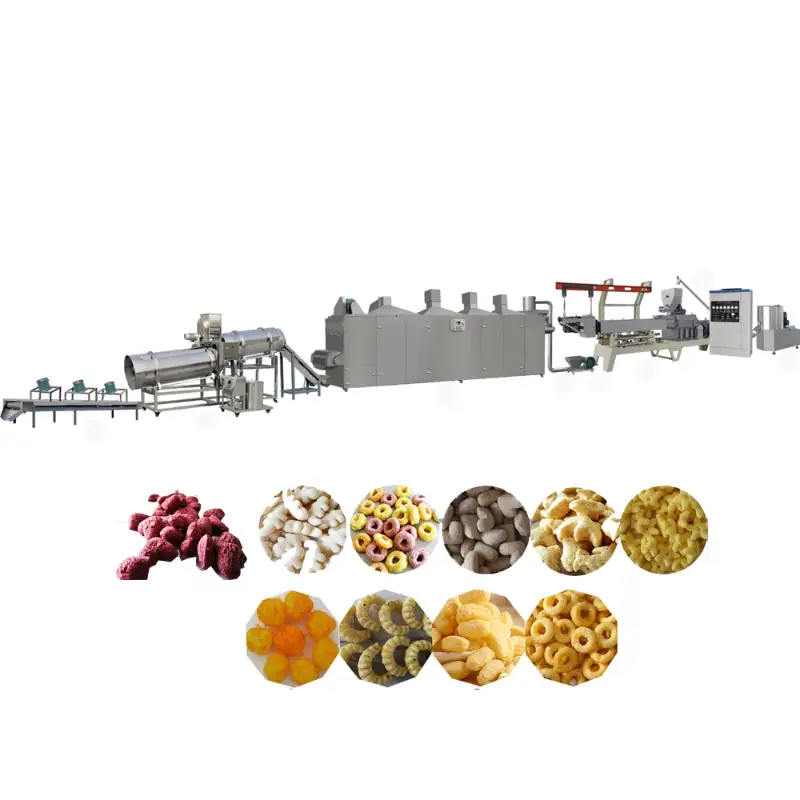
A qualified snack production line supplier Mexico should provide more than machines. The supplier should understand raw material behavior, product formulation, output planning, plant layout, automation requirements, and after-sales technical support. Whether you plan to produce corn puffs, pellet snacks, extruded snacks, or coated puff products, the right system design will influence capacity, energy consumption, product texture, and long-term return on investment. In this article, we will explain how to evaluate suppliers, compare line configurations, and identify the technical factors that matter most when buying a modern snack food production line for the Mexican market.
Why Is Mexico an Attractive Market for Snack Production Investment?
Mexico is one of the largest snack-consuming markets in Latin America, with strong demand for corn-based snacks, extruded puff products, coated snacks, and convenience foods. This demand is driven by urban lifestyles, modern retail growth, and a well-established snack culture. For manufacturers, this creates a favorable environment for investing in snack food processing machinery that can deliver high output and flexible product development.
Mexico also offers strategic manufacturing advantages. It has access to corn and other agricultural raw materials, established food distribution channels, and geographic proximity to the United States and Central America. For exporters, local production can shorten delivery cycles and improve responsiveness to market trends. For domestic producers, efficient snacks manufacturing machine systems can reduce labor dependence and improve consistency across batches.
From a B2B perspective, the market opportunity is not limited to mass-market chips or puffs. There is growing space for healthier extruded snacks, private label supermarket products, and regional flavor innovation. This means buyers need equipment that is not only efficient, but also flexible enough to adapt to different formulations and packaging formats.
Core reasons buyers target Mexico for snack manufacturing
- Strong and stable consumer demand for packaged snacks
- Large corn-based snack category with local raw material access
- Favorable location for exports to North and Latin America
- Growth of private label and contract snack manufacturing
- Expanding demand for automated and hygienic snack food production line systems
What Should a Qualified Snack Production Line Supplier Mexico Actually Provide?
When buyers search for a snack production line supplier Mexico, they should not focus only on machine price. The supplier should be able to deliver a complete production solution that matches product type, output target, factory space, and food safety requirements. A low-cost machine without engineering support can create far more expense later through unstable output, inconsistent expansion, and difficult maintenance.
A qualified supplier should first evaluate the target product. For example, a corn puff production line requires different extrusion, drying, and seasoning parameters than a pellet frying line or a filled snack line. The supplier should then recommend a production layout that integrates raw material feeding, extrusion or forming, drying or frying, flavoring, cooling, and packing interface. This is where supplier experience becomes critical.
The best suppliers also support process optimization. They help customers balance moisture control, barrel temperature, screw configuration, cutter speed, and seasoning uniformity. These details directly affect product shape, expansion ratio, crispness, and shelf stability. In practical terms, a supplier is not simply selling metal. It is selling repeatable snack output.
A reliable supplier should offer the following capabilities
- Product-based line design instead of generic machine bundles
- Capacity planning based on target hourly output
- Extrusion, frying, drying, and seasoning process guidance
- Utility planning for power, gas, steam, and compressed air
- Installation, commissioning, and operator training support
- Spare parts and remote troubleshooting service
- Compliance support for food-contact materials and hygiene design
How Do You Match the Production Line to the Snack Product You Want to Make?
The correct line configuration depends on the snack category you plan to manufacture. Many procurement problems happen because buyers start with a machine list instead of a product list. A snack line should always be designed around product texture, shape, raw material, moisture profile, and output target.
Corn puff and extruded snack lines
For puffed corn snacks, the core system usually includes a mixer, screw feeder, extruder, air conveyor, dryer, flavoring drum, and cooling section. A corn puff production line must control starch gelatinization, pressure release, and moisture reduction to produce a stable expanded structure. If your product range includes cheese balls, puff rings, corn curls, or breakfast puff snacks, the line should support interchangeable dies and adjustable process parameters.
This is also where choosing the right snack making machine matters. A properly engineered extruder and dryer combination can improve product expansion, reduce breakage, and maintain consistent texture across different production shifts.
Fried pellet snack lines
If the target product is pellet chips, bugles-style shapes, or mixed flour fried snacks, the process will differ. These lines may include a pellet former, dryer, fryer, deoiling system, seasoning unit, and packaging connection. Oil management and frying temperature control become much more important than in an extruded puff line.
Baked and coated snack lines
For baked snacks or premium coated products, seasoning uniformity, moisture control, and product handling become central design factors. These products often require gentler conveying and more precise drying curves.
Key questions before finalizing a line
- What snack category will generate the highest local demand?
- Will the line produce one SKU or multiple products?
- What is the target output per hour and per shift?
- Will the product be fried, baked, or extruded?
- Do you need room for future expansion into new snack formats?
Which Technical Factors Matter Most When Comparing Snack Food Processing Machinery?
The right machine line is a factory asset for years, not a short-term purchase. That is why buyers should compare technical details that affect efficiency, maintenance, product quality, and operating cost. In many cases, the difference between a profitable line and a frustrating one lies in small engineering decisions.
Extruder stability and screw design
In extruded snack production, screw design directly affects mixing, pressure build-up, cooking, and product expansion. A poorly matched screw can cause unstable texture, excessive fines, or uneven product density. Buyers should ask what screw configurations are recommended for corn-based puff snacks, mixed grain snacks, or filled products.
Dryer efficiency and moisture control
A dryer must remove moisture evenly without burning the product surface or creating soft centers. Multi-layer or multi-zone dryers allow better temperature control and can improve energy efficiency. This matters for both product quality and shelf life.
Flavoring and seasoning performance
Seasoning is not a decorative afterthought. Poor powder adhesion or uneven oil spraying can ruin an otherwise good product. A line should have a seasoning system matched to the target coating style, whether powder, oil, slurry, or mixed flavor systems.
Hygiene design and cleaning access
Snack factories need fast cleaning and low contamination risk. Stainless contact parts, accessible hoppers, removable dies, and clean cable routing all help reduce downtime and improve food safety management.
Utility consumption and maintenance simplicity
Buyers should compare total power load, compressed air demand, fuel use, and wear-part replacement frequency. A cheaper line can become expensive if it consumes too much energy or requires frequent downtime.
Quick Comparison Table for Snack Line Selection
| Snack category | Typical core equipment | Main process method | What buyers should prioritize |
|---|---|---|---|
| Corn puffs and extruded curls | Mixer, feeder, extruder, dryer, flavoring line | Extrusion and hot air drying | Expansion ratio, die flexibility, dryer stability |
| Fried pellet snacks | Former, dryer, fryer, deoiler, seasoning line | Forming plus frying | Oil control, frying stability, shape consistency |
| Baked cereal snacks | Mixer, extruder or sheeter, oven, flavoring unit | Baking | Moisture control, texture uniformity |
| Coated premium snacks | Base snack line plus coating system | Extrusion or frying with coating | Coating consistency, product handling |
| Multi-product snack line | Modular extrusion and seasoning system | Flexible configuration | Fast changeover and product adaptability |
Table caption: Typical snack line configurations and the technical priorities buyers should compare before purchase.
If you are planning a new snack project or upgrading an existing plant, contact Meiteng for a tailored snack line solution.
How Can Buyers in Mexico Evaluate a Supplier Beyond the Quotation?
A quotation is only a starting point. Smart B2B buyers evaluate the supplier’s ability to support production after the machine arrives. A supplier that answers technical questions clearly before the order is more likely to solve problems efficiently after installation.
Ask for a process-based proposal
Instead of requesting a simple machine list, ask the supplier to provide a process flow and line layout. This shows whether the supplier understands your product and factory workflow. It also helps you estimate plant space, utility connections, and labor requirements.
Review reference projects and product samples
Ask what products the supplier has already produced with similar lines. If possible, request sample photos, running videos, or test results for products similar to yours. This is especially useful if you want to produce corn puffs, mixed-grain extruded snacks, or coated products with specific shape and density targets.
Evaluate commissioning and training support
A line is only valuable when your team can run it consistently. Ask whether the supplier provides on-site commissioning, recipe adjustment, operator training, and remote troubleshooting. This matters even more for buyers new to snack food processing machinery.
Look at spare parts and lead time planning
Extrusion lines include wear parts such as screws, dies, bearings, belts, and heaters. A good supplier should identify critical spare parts in advance and recommend a startup spare parts package. This reduces the risk of avoidable downtime.
What Mistakes Should Buyers Avoid When Buying a Snack Food Production Line?
Even experienced food companies can make costly mistakes during equipment procurement. Most of these errors happen because the purchase decision focuses too heavily on initial price and not enough on production reality.
Common buying mistakes
- Choosing equipment before defining the final snack product
- Ignoring utility requirements and factory layout limits
- Underestimating the importance of operator training
- Buying a line with no room for SKU expansion
- Focusing on machine price without comparing lifecycle cost
- Skipping seasoning and drying performance evaluation
- Failing to confirm spare part availability and service response time
A useful rule is this: if a supplier cannot explain how the line affects expansion, moisture, texture, and seasoning performance, it is not yet a true production partner.
Core Takeaways for Decision-Makers
For buyers looking for a snack production line supplier Mexico, the best decision is rarely the cheapest quote. It is the supplier that can align machine design with product goals, plant realities, and future business plans. The line must fit the snack, not the other way around.
Key points to remember
- Mexico is a strong market for snack manufacturing investment due to demand, raw material access, and export potential
- A qualified supplier should provide a complete process solution, not just isolated machines
- Product type determines the correct line configuration, especially for extruded and fried snacks
- Technical details such as screw design, drying performance, and seasoning accuracy directly affect profit
- Supplier support, training, spare parts, and commissioning are critical for long-term line performance
- A well-selected snack food production line can improve output stability, product consistency, and ROI
FAQ
1. Why is Mexico a good market for snack production investment?
Mexico has strong snack consumption, access to corn-based raw materials, and a strategic location for serving both domestic and export markets.
2. What should a snack production line supplier Mexico provide besides machines?
A good supplier should provide line design, process guidance, layout planning, commissioning, training, and after-sales support.
3. What is the difference between a corn puff production line and a fried snack line?
A corn puff production line mainly relies on extrusion and drying, while a fried snack line focuses more on pellet forming, frying, oil control, and deoiling.
4. How do I choose between different snacks manufacturing machine options?
Start from your target product, output, factory space, utility availability, and future SKU expansion plan. Then compare technical design and supplier support.
5. What technical factors most affect snack product quality?
Extruder stability, screw configuration, dryer performance, seasoning consistency, and moisture control all have a major effect on final product quality.
6. Is it better to buy a single machine or a complete snack food production line?
For commercial production, a complete line is usually better because it ensures process continuity, consistent output, and easier system integration.
About Meiteng
Meiteng is a professional food production line supplier focused on practical, scalable, and efficient snack processing solutions for global food manufacturers. We provide customized systems for puff snacks, extruded products, corn-based snacks, and other modern convenience foods. Our engineering team supports customers from line selection and plant planning to installation, commissioning, and process optimization. By combining reliable snack food processing machinery with application-driven design, Meiteng helps customers build stable production capacity, improve product consistency, and develop competitive snack products for local and export markets.
References
- Snack food background and market context
https://en.wikipedia.org/wiki/Snack_food - Food processing overview
https://www.britannica.com/technology/food-processing - Food manufacturing and agricultural trade statistics
https://www.fao.org/