How Can You Design a Food Machine That Passes a Strict HACCP Audit Every Time?
June 5, 2026
A food machine can pass a strict HACCP audit every time only when its design, materials, process control, hygiene structure, and traceability systems are built in alignment with HACCP principles from the earliest engineering stage. In practical terms, this means the equipment must eliminate contamination risks by design rather than relying on inspection alone. For example, a snack extrusion line producing high-moisture products for export markets must integrate hygienic stainless steel structures, easy-clean surfaces, controlled airflow systems, and fully traceable production data. Without these design foundations, even advanced machines may fail audit requirements due to hidden risks such as residue accumulation, microbial growth zones, or poor maintenance accessibility.
For a food industry equipment supplier, HACCP compliance is no longer a “final inspection requirement” but a core design philosophy embedded into every production line and machine component.
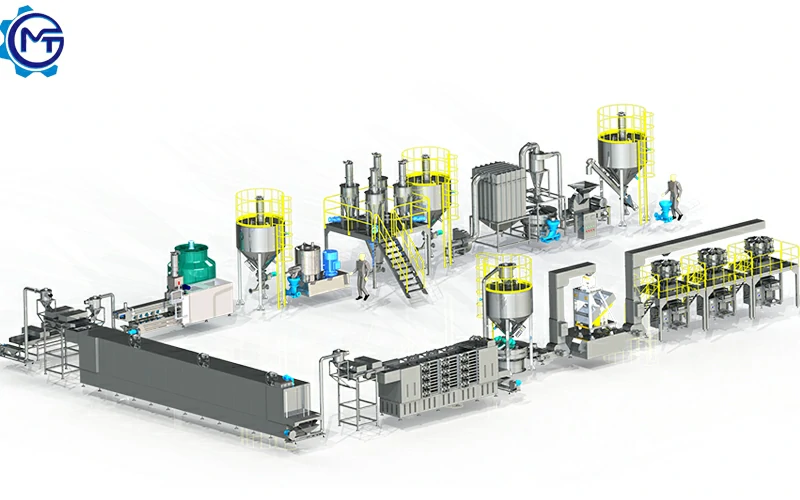
Understanding HACCP Requirements in Food Machine Design
Hazard Analysis and Critical Control Points (HACCP) is a globally recognized system that focuses on identifying, evaluating, and controlling food safety hazards. When applied to food machinery design, it ensures that every stage of production minimizes biological, chemical, and physical risks.
Why HACCP Is Critical for Modern Food Equipment
Food manufacturers operate under strict regulatory environments, especially in export-driven markets. HACCP compliance ensures:
- Reduced contamination risk
- Consistent product safety
- Regulatory approval for international markets
- Improved customer trust
Machines that are not designed with HACCP principles often fail audits due to structural hygiene issues rather than operational errors.
Real-World Example in Production Lines
A beverage filling system without proper drainage design may accumulate liquid residue, creating microbial risk zones. In contrast, a properly engineered system with sloped surfaces and sanitary welds eliminates stagnant zones, ensuring audit readiness.
A well-designed food factory production line integrates these principles across all processing stages, from raw material handling to final packaging.
Hygienic Design Principles for HACCP-Compliant Machines
Hygienic design is the foundation of any machine that aims to pass HACCP audits consistently.
Material Selection and Surface Finishing
Food-grade stainless steel, typically SUS304 or SUS316, is widely used due to its corrosion resistance and ease of cleaning.
Key requirements include:
- Smooth surface finish (Ra ≤ 0.8μm)
- Corrosion-resistant materials
- Non-toxic, food-safe components
- Minimal weld gaps and joints
Eliminating Contamination Traps
Design engineers must eliminate:
- Dead corners
- Hollow structures without drainage
- Overlapping joints
- Non-accessible mechanical zones
These areas are common failure points during HACCP inspections.
Example in Industrial Applications
In meat processing equipment, improperly sealed joints can trap organic residue, leading to microbial growth. Proper hygienic redesign eliminates such risks entirely.
High-quality industrial food processing equipment is engineered to avoid these structural vulnerabilities.
Process Control Integration for HACCP Compliance
A HACCP-ready machine is not only about structure but also about intelligent process control.
Temperature, Pressure, and Timing Control
Critical control points (CCPs) must be continuously monitored. This includes:
- Cooking temperature stability
- Sterilization cycle accuracy
- Mixing time consistency
- Cooling rate control
Any deviation must trigger automatic alerts or shutdown systems.
Automation and Monitoring Systems
Modern food machinery integrates PLC systems and sensors to ensure:
- Real-time data tracking
- Automatic correction of deviations
- Digital logging for audits
- Remote monitoring capabilities
Case Example in Extrusion Systems
In snack production, extrusion temperature fluctuations can affect product safety and texture. Advanced control systems ensure stable output quality while maintaining HACCP compliance.
A well-engineered food extrusion machine factory focuses heavily on automation precision and process consistency.
Cleanability and Maintenance Design Strategy
Cleanability is one of the most heavily evaluated aspects during HACCP audits.
Quick-Clean Structural Design
Machines must support fast and effective cleaning processes.
Key features include:
- Tool-less disassembly points
- CIP (Clean-In-Place) systems
- Smooth internal surfaces
- Wash-down resistant components
Maintenance Accessibility
Maintenance areas must be:
- Easily accessible
- Clearly separated from food contact zones
- Designed to prevent cross-contamination
Hygiene Validation in Practice
During audits, inspectors often request cleaning validation records. Machines designed with CIP systems significantly reduce audit failure risks.
Engineering Food Machines for Audit Readiness
Designing for HACCP is not a final-stage adaptation but a full lifecycle engineering approach.
A reliable food production line equipment portfolio should integrate compliance considerations from conceptual design through installation.
Documentation and Traceability Systems
Every machine must support:
- Batch tracking
- Equipment calibration logs
- Maintenance history records
- Sensor data archives
This documentation is often reviewed during HACCP audits.
Risk-Based Design Approach
Engineering teams must evaluate:
- Raw material risks
- Cross-contamination points
- Human-machine interaction risks
- Environmental exposure risks
This ensures proactive hazard prevention rather than reactive correction.
HACCP Compliance Comparison in Food Machine Design
| Design Aspect | HACCP-Compliant Design | Non-Compliant Design |
|---|---|---|
| Material Type | Food-grade stainless steel | Mixed or low-grade metals |
| Surface Design | Smooth, polished, easy-clean | Rough, porous surfaces |
| Structural Layout | Open and accessible | Hidden dead zones |
| Process Control | Automated monitoring | Manual operation |
| Data Traceability | Digital logging system | Paper-based records |
| Cleaning System | CIP integrated | Manual cleaning only |
| Audit Performance | Consistently passes | High failure risk |
How Food Manufacturers Reduce HACCP Audit Risks
Food manufacturers must collaborate closely with equipment suppliers to ensure compliance.
Supplier Engineering Collaboration
Early-stage collaboration helps ensure:
- Correct hygienic design principles
- Proper material selection
- Compliance with export regulations
Preventive Maintenance Strategy
Regular maintenance prevents:
- Equipment wear contamination
- Sensor failure
- Calibration drift
Staff Training and SOP Integration
Even the best equipment requires proper operational procedures:
- Standard cleaning protocols
- Safety training
- Documentation practices
If you are planning to upgrade your production facility or need HACCP-compliant food processing solutions, contact our engineering team for customized machine design and full production line support.
Frequently Asked Questions
What is HACCP in food machine design?
HACCP in machine design refers to engineering equipment that prevents food safety hazards through structural hygiene, process control, and traceability systems.
Why do food machines fail HACCP audits?
Common reasons include poor hygienic design, hard-to-clean surfaces, lack of process control, and insufficient documentation systems.
What materials are required for HACCP-compliant machines?
Food-grade stainless steel such as SUS304 or SUS316 is typically required due to its durability and corrosion resistance.
How does automation help HACCP compliance?
Automation ensures real-time monitoring, reduces human error, and provides digital traceability for audits.
Is cleaning system design important for HACCP?
Yes, cleanability is a critical requirement, and CIP systems are often preferred for reducing contamination risks.
Can existing machines be upgraded to HACCP standards?
In some cases, yes, but full compliance is usually more effectively achieved through purpose-built hygienic design.
Why Choose Meiteng?
Meiteng is a professional food industry equipment supplier specializing in designing and manufacturing advanced, hygienic, and high-performance food processing systems. With strong engineering capabilities and extensive industry experience, we provide complete solutions covering production line planning, equipment manufacturing, automation integration, and HACCP-compliant system design. Our focus is to help global food manufacturers improve efficiency, ensure product safety, and pass international audits with confidence.
References
- Codex Alimentarius Commission – HACCP Guidelines
https://www.fao.org/fao-who-codexalimentarius - World Health Organization – Food Safety and HACCP
https://www.who.int/news-room/fact-sheets/detail/food-safety - Wikipedia – Hazard Analysis and Critical Control Points
https://en.wikipedia.org/wiki/Hazard_analysis_and_critical_control_points